When you purchase gear through links on our site, we may earn a small commission. Here’s why you can trust our tests and our affiliate partner.
We love testing gear we haven’t seen before, and even more so when it comes from a brand we haven’t tested in quite a while. So expectations were high when we received an email offering us the chance to test the latest CrazyFly Nuke. CrazyFly is one of the few brands that manufactures all its gear in Europe and, even more impressively, develops and produces most of it in-house. That’s quite remarkable considering the way the industry operates nowadays. CrazyFly boards are a common sight in Tarifa and are one of the most popular choices among beginners, mainly thanks to their performance-to-price ratio. Their kites, however, are something we don’t get to see very often around here.
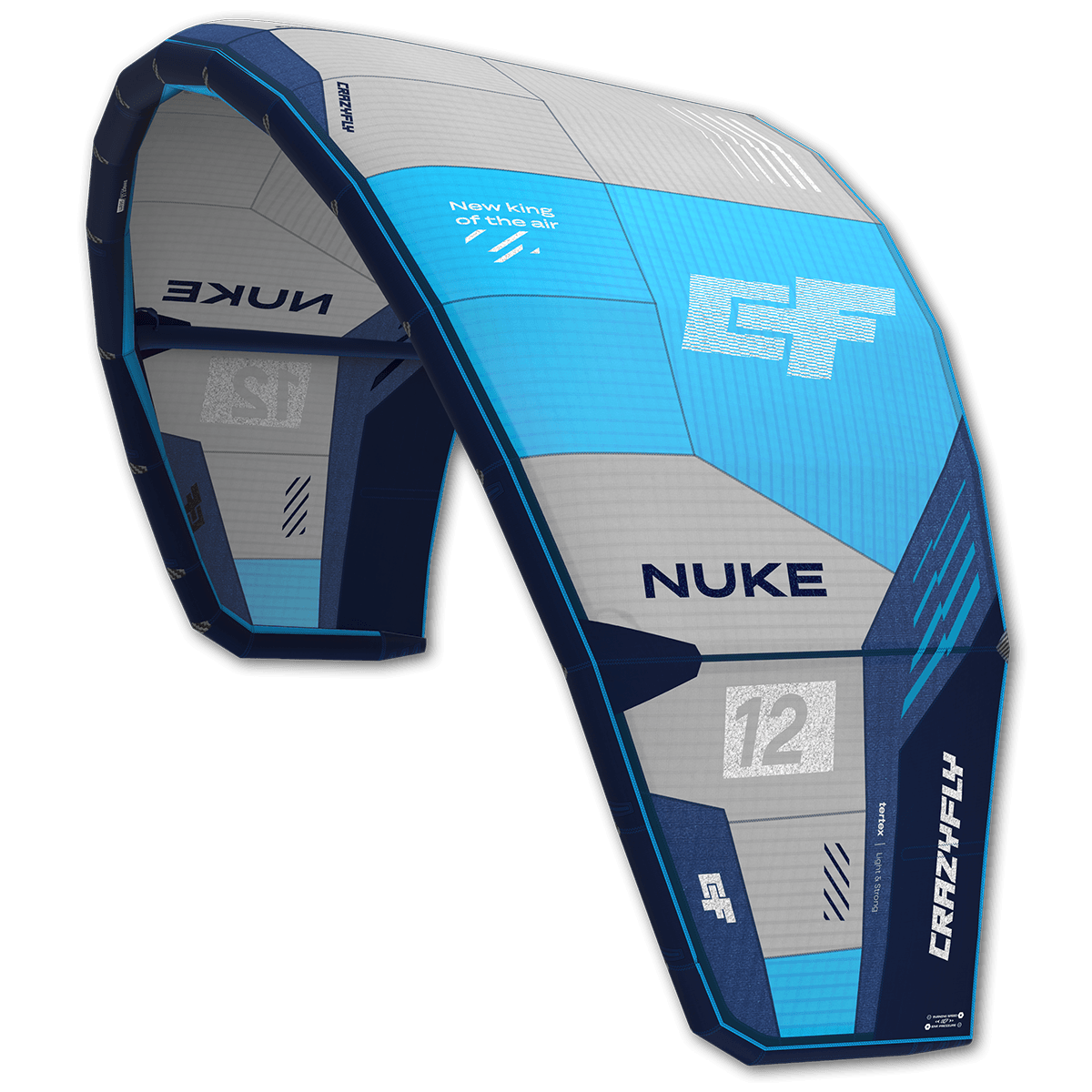
We received a 9m Nuke paired with their Savvy Bar. Packaging and presentation are something CrazyFly takes seriously, but once we managed to get through all the layers and labels and finally pulled the kite out of the bag, our first impression was that it felt slightly heavier than average. It was only when we unrolled it that we understood why. The Nuke is a 3-strut, open-C kite with a Dacron frame and a 3×3 yarn canopy. However, the feel of the canopy in your hands is quite different from what we are used to seeing across the industry. It feels denser and, honestly, more durable and rigid than expected. Reinforcements are well placed, and the kite also offers different front-bridle settings, allowing you to choose between a more all-round setup and an option specifically aimed at stronger winds.
It is also worth mentioning CrazyFly’s Airlock II Valve, which is developed in-house. Rather than being welded or glued directly to the bladder, the valve is attached using a mechanical bond. We didn’t take the bladder out to inspect the construction personally, so we can’t comment on what is happening inside, but from the outside it looks just like a conventional SUP valve. If the mechanical attachment proves as reliable as it appears, it could potentially offer better long-term durability.
To honor the kite, our first session was in properly nuking conditions. The few people who were out at the time were mostly on 7m kites, with very few on 8m, while we headed out on the 9m. As we pumped it up, it immediately looked more “C” shaped than we had expected, which left us unsure of how it would behave in those strong winds. Once in the air, bar pressure and steering pressure are both quite light, but there is enough feedback to maintain a clear connection with the kite. Depower was sufficient for those conditions, although we did miss a little more bar throw during the strongest gusts. Even so, it remained manageable considering just how hard the wind was blowing. Turning is quite pivotal, so when we went for our first loop, our confidence in the kite’s recovery was already fairly high. And we weren’t disappointed. The Nuke turns on a dime, with a strong and consistent pull that feels closer to the old-school kiteloop style than to the newer Big Air trend. We really enjoyed this characteristic, especially because the kite gives you confidence that it will consistently make its way back to 12 o’clock. Lift is impressive for the type of kite the Nuke is, although hangtime was only average, which is exactly what we would expect given its shape. The kite feels very compact in the air and never seemed to lose its shape, giving us plenty of confidence when riding fully powered in those strong conditions. The Nuke performed really well in that session, but once we came off the water, we were already looking forward to trying it again, but this time in more moderate conditions.
We didn’t have to wait long, just a couple of days later the wind dropped considerably, letting us enjoy the kite in the medium range. Bar feel stayed consistent, the kite remained agile and lift was still quite good. As the wind eased further, the low end also performed well, though not quite as impressively as the top end. We had some kickers out that day, and as the wind faded, we remembered why we always ride with a long leash and went for some unhooked flat-3s and flat-5s off the kicker. Slack proved excellent, and we landed most of our attempts, making the session far more fun than we’d expected given the dying wind.
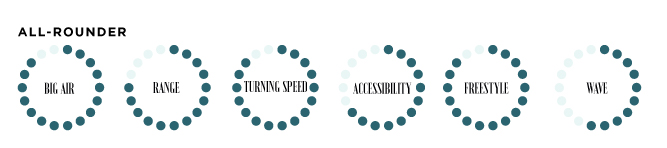
So, what kind of rider will get the most out of the CrazyFly Nuke? Most probably the kind of die-hard rider who enjoys unhooked freestyle when the wind is low or medium, but also wants to boost and throw some proper kiteloops when the wind picks up. It’s not a dedicated unhooked freestyle machine, and it’s not a purpose-built Big Air weapon either but it’s a genuinely capable crossover, letting you have fun in both disciplines without needing two different kites. There aren’t many brands out there betting on this type of kite nowadays, so it is refreshing to see something like the Nuke still available on the market. It might not follow the current Big Air trend, but that is precisely what makes it interesting.