When you purchase gear through links on our site, we may earn a small commission. Here’s why you can trust our tests and our affiliate partner.
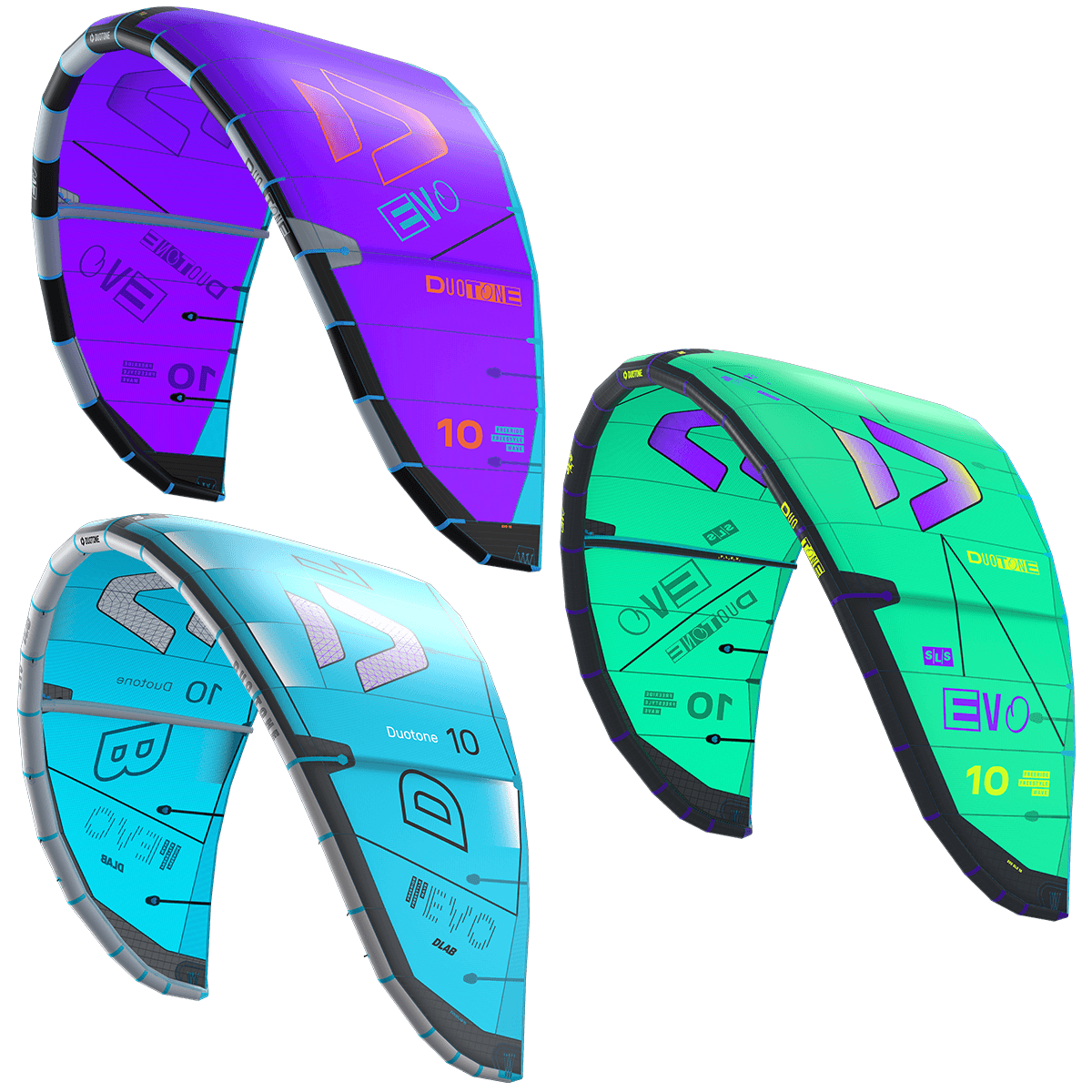
When we got the assignment to test all three versions of the Duotone Evo, our first reaction was excitement. Our second, once the logistics sank in, was that this was going to be a real challenge. We like to spend proper time with everything we test, and here we had three different constructions to get through, which meant carefully picking days where we could test all three in matching sizes and reasonably similar conditions, giving us a fair baseline for the review.
The Duotone Evo has been on the market for nearly 20 years, cycling through different shapes, disciplines and strut counts along the way. The Evo we know today is an all-round 3-strut kite that, in recent years, comes in three distinct builds depending on materials: the Evo Original, the Evo SLS and the Evo D/LAB.
Let’s start with what they share. All three use the same canopy material – Trinity TX, a 3×2 fabric Duotone has relied on for years for its balance of strength and longevity – paired with MOD 3S, a stiffer, more resistant material along the trailing edge. Construction-wise, the reinforcements and overall build quality we’ve come to expect from Duotone are all present and accounted for. So, what actually separates them? The frame material. The Evo Original uses standard Dacron throughout the leading edge and struts. The Evo SLS steps up to Penta TX, a lightweight Dacron with added stiffness that makes a genuine difference in both weight and rigidity. And the Evo D/LAB tops the range with the new Aluula D/TX, a departure from the Aluula Gold material Duotone has used until now, significantly lighter and stiffer than Penta TX, and already proven over a full season on the Rebel D/LAB with excellent results.
Our first session was on the Original Evo, in a soft, clean Levante with no waves and turquoise water, basically the ideal Levante for anyone learning or building their skills here in Tarifa. The first thing we noticed on launch was the balanced bar pressure: not heavy, but solid and full of feedback. We always knew exactly where the kite was in the window, a trait beginners will especially appreciate. The next standout was its sheet-and-go character as this kite is effortless to handle and generates power with zero fuss. Combine that with dead-simple water relaunch, and it’s immediately obvious why every kite school around here running Duotone gear reaches for the Evo Original. After some tacking, we moved on to jumps and found the kite just as easy in the air – lift is solid and progressive, hangtime is generous and there’s plenty of fun to be had even in lighter wind. We managed to get another session on the Original, although unfortunately this time we got the classic Tarifa Levante, with aggressive gusts and pretty much every possible wind condition packed into the same session. The kite handled the gusts surprisingly well, offering a very usable wind range, but we got the feeling that where it truly shines is in the low and mid-range.
After a couple of sessions on the Original, we stepped up to the SLS, again in Levante, making for a great back-to-back comparison. The first thing you notice is the weight: noticeably lighter, and once pumped up, noticeably stiffer. The material upgrade really shows. From launch, this kite feels more alive, sportier. Bar pressure is lighter and the kite feels sharper and more surgical in its responses – pull the bar and the reaction is instant, with zero lag between input and output. If one word defines this kite, it’s precision. That precision carried straight into our first jumps, where the difference from the Original was immediately apparent – lift is far more explosive and vertical, a clear step up. Kiteloops revealed an even bigger gap: the SLS pivots on its edge and snaps back to 12 o’clock incredibly fast, opening up room for more advanced tricks and building confidence from the very first loop. Downloops for landings are easy to time perfectly, with a nice second lift. Across a few more sessions in gusty, variable conditions, the added stiffness never became a liability, though how it compares to the Original in rough conditions will come down to personal preference and skill level. In terms of range, the SLS improves on both ends of the range, but like the Original, it’s happiest in the low end and upper-mid range.
We closed out testing with the D/LAB, a kite we’d been especially eager to fly again, since we still remember its first iteration a few years back as one of the best-performing kites we’ve ever tested. Weight is once again the headline improvement: noticeably lighter than the SLS, with a recommended inflation pressure of 10 PSI. Once pumped, the kite feels remarkably rigid, and the new Aluula material feels distinctly more durable in hand than the Gold material we’re used to. Our first session was in properly nuking wind with riders around us on 7m, a few on 8m and, with only a few days to test this kite, we took our 10m. In the air, deformation is essentially zero; the new Aluula feels like carbon fiber and the kite responded as if it were reading our thoughts rather than our bar inputs. This might sound intimidating on paper, but it felt completely natural in practice, and we suspect it would for most riders. We were seriously overpowered that day, yet never once felt out of control. Lift and hangtime were both huge, with impressive second lifts on top. Even in that wind, the kite stayed friendly to handle with a massive range, though it did demand some skill to keep fully in check – to be fair, we were pushing its top end maybe too much! After a session full of big jumps and even bigger smiles, we left eager to try it again in calmer conditions for a fairer comparison against the other two.
We didn’t have to wait long. The very next day brought the wind we were after, and from the first moment in the air, the same lightning-fast reactions and razor-sharp feedback had us hooked. That’s when we got to try our first loops. The kite is fast and pivotal, making loops almost too easy, but the real highlight was the downloops and second lifts. We even caught a couple of magic gusts that delivered 20-plus-second jumps packed with countless downloops, and somehow it all felt easy and unintimidating, unlike the nervy edge some kites bring to jumps like that. To wrap up testing, we squeezed in a foil session and this kite was an absolute joy on the foil too. In a mere 8 knots, it flew without hesitation, delivering excellent power, drift and jump capability, turning what was meant to be a relaxed cruise into a genuinely active session.
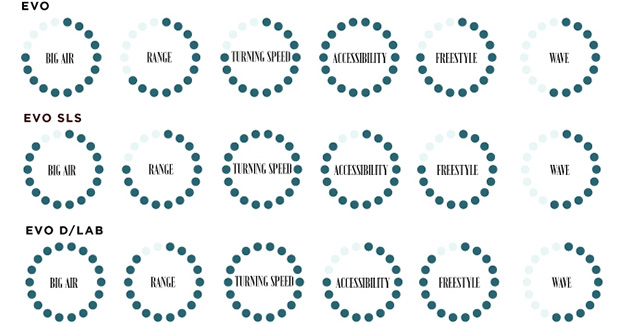
Now, let’s address the obvious first: the D/LAB outperforms the SLS on literally every metric, and the SLS outperforms the Original. No surprises there. The real question is which rider gets the most out of each.
The Original is the top pick for fresh-out-of-lessons beginners, or anyone wanting a friendly, confidence-building kite to progress on in a wide range of conditions. Strong upwind performance, easy handling, a great low end, light bar pressure, and solid bar feedback are this kite’s calling cards.
The SLS suits the same riders as the Original, but also appeals to those chasing an easy-to-fly platform for leveling up their riding across the board. It’s a fantastic all-rounder – foil, twintip, and, we’d wager, surfboard too (though we didn’t get the chance to test that ourselves) – but it’s best suited to riders wanting a livelier kite for boosting bigger air. It jumps high with minimal effort, offers excellent hangtime and asks nothing technical of the rider in return.
The D/LAB… this one’s a different animal altogether. It would suit any of the riders mentioned above, but it’s the clear choice for those chasing maximum performance without compromise. It excels at every style of riding, in every wind condition. The Evo D/LAB is the ultimate do-it-all kite for riders who want top-tier performance across every discipline, regardless of what the wind throws at them.