When you purchase gear through links on our site, we may earn a small commission. Here’s why you can trust our tests and our affiliate partner.

TheKiteMag 68 Levitaz Free Series 8 1200x800 - Tech & Materials: Levitaz Free Series

Tech & Materials: Levitaz Free Series

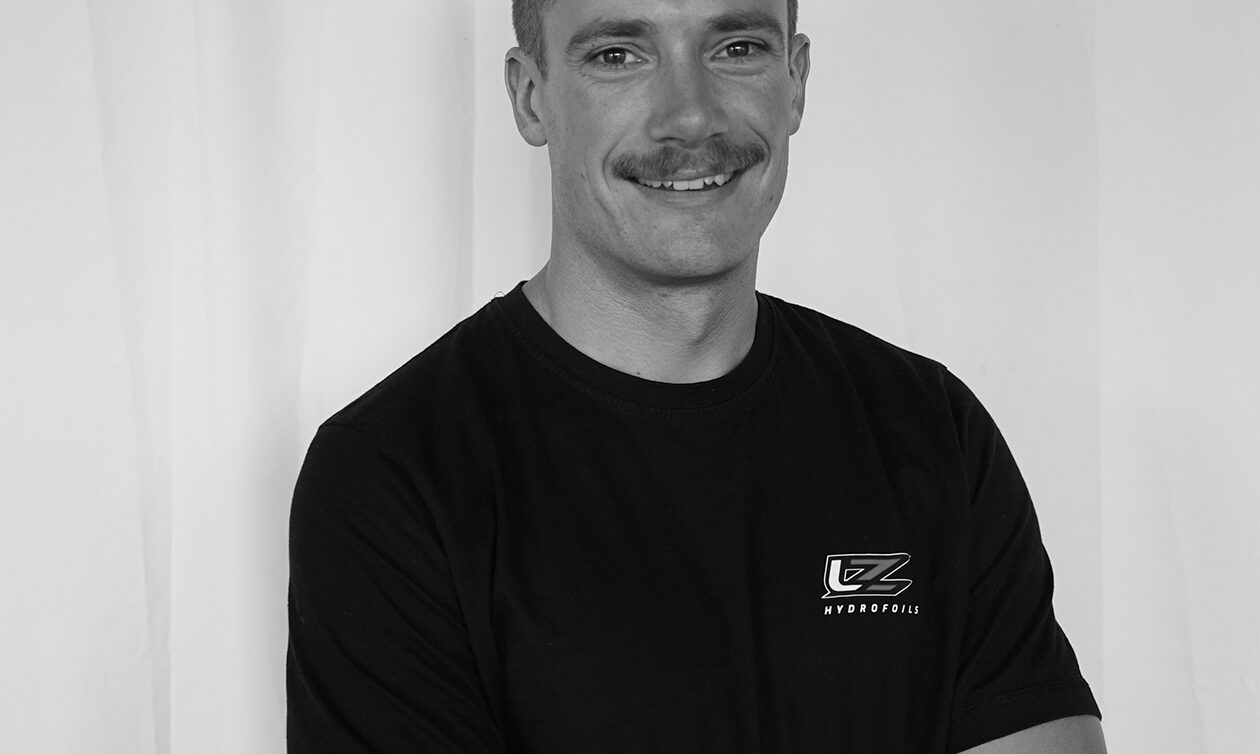
If you caught our last issue, you’ll have seen that Levitaz has released a new freeride foil range. Here we dive deeper into the tech and materials behind the series with Levitaz R&D Engineer, Henrick Pagel, pictured top right.

Photos Arian Lebedinec


THEKITEMAG ISSUE #68

Talk to us about the all-new mast-to-fuselage connection system, and why have you chosen mixed materials.

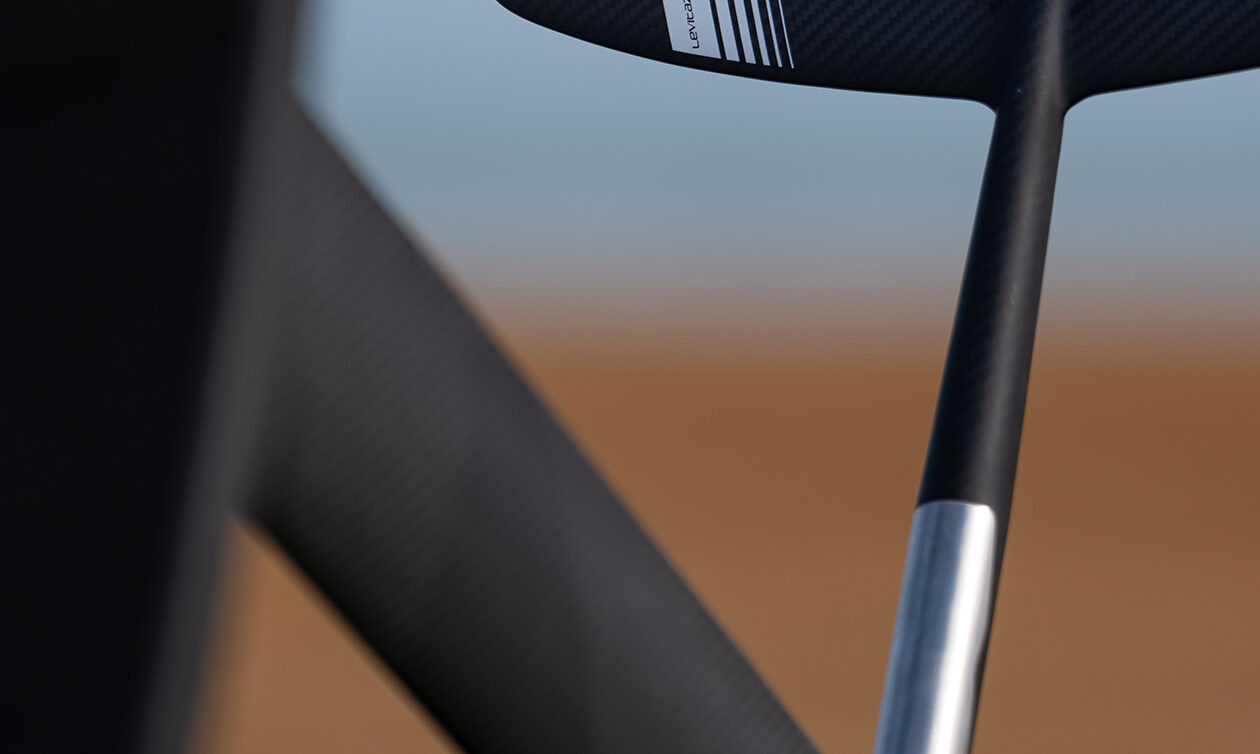
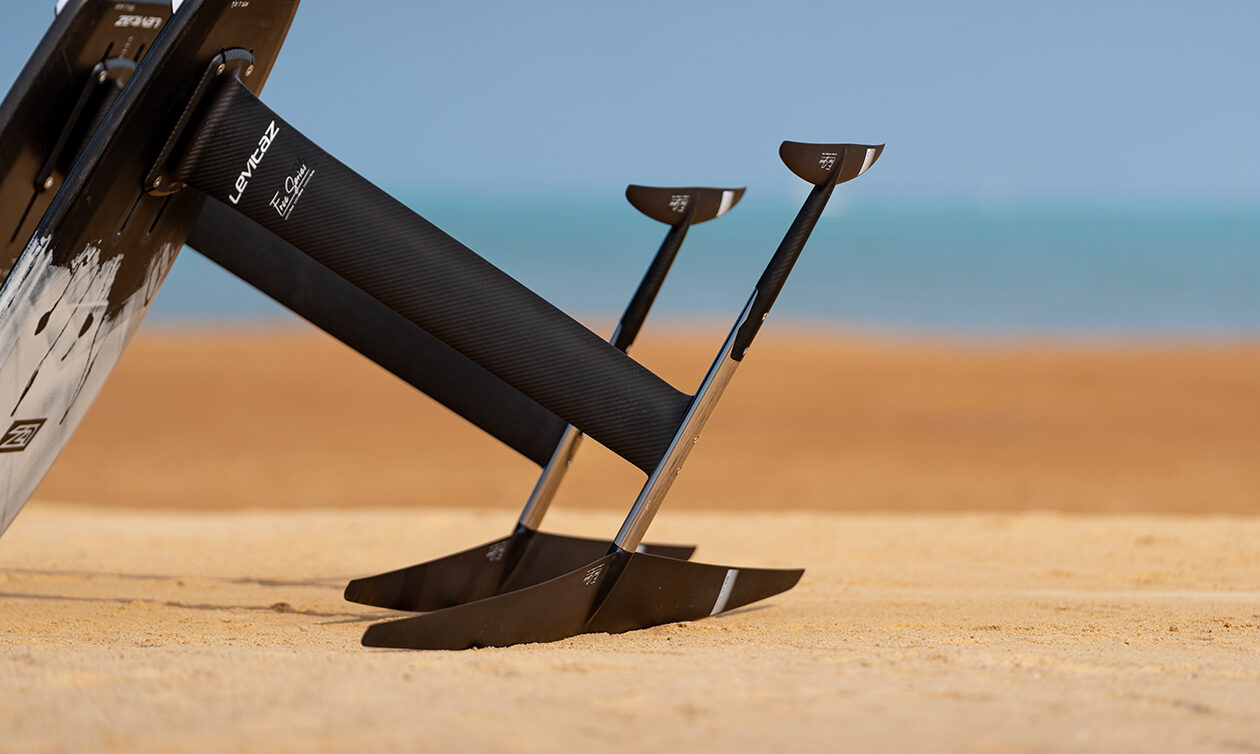
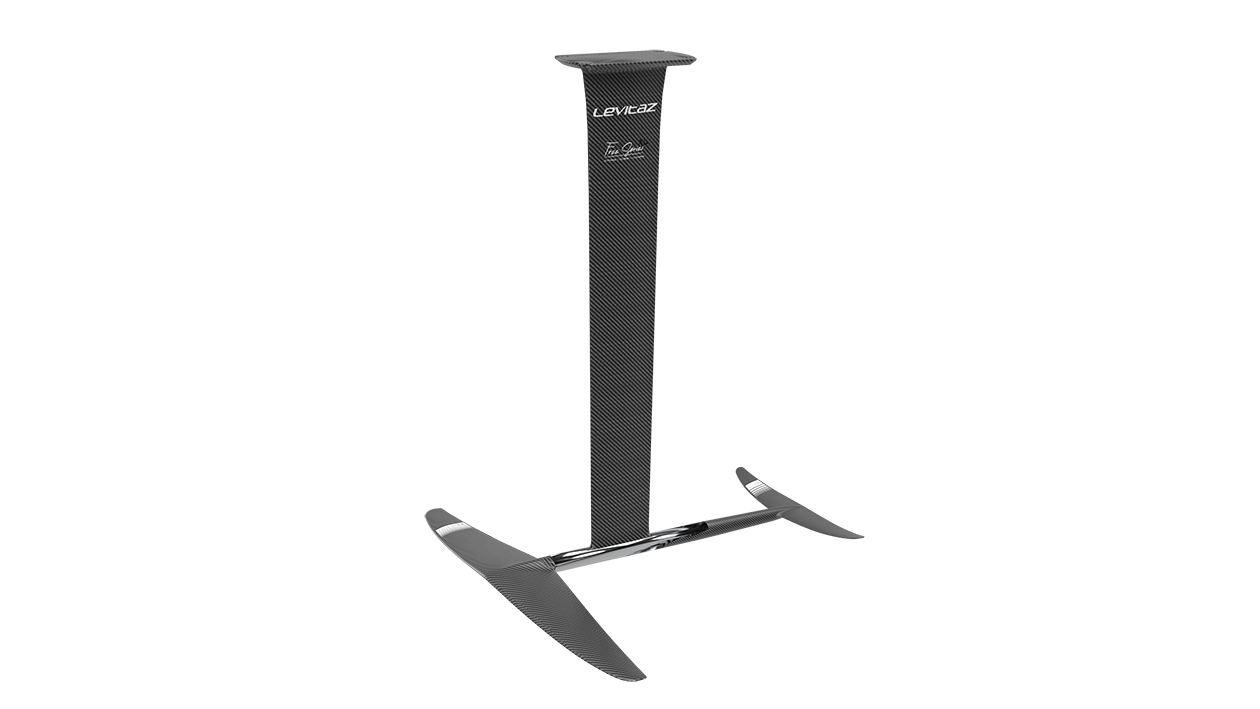
The stiffness of a hydrofoil system is defined by three main factors: the materials used, the fit between the assembled parts, and the thickness of the cross-sections. The fuselage plays a key role because it has to combine all three. High-modulus carbon fiber laminates offer up to six times the specific stiffness of aluminum and titanium alloys. At the same time, carbon laminates are highly anisotropic: they carry loads most efficiently in the direction of the fibers. If the fibers are not well aligned with the loads in the part, strength and stiffness decrease significantly. Components such as the mast, front wing and stabilizer are beam-like structures with clear loading directions and smooth curves, so the carbon fibers can be aligned very efficiently. This allows us to tune bending and torsional stiffness for each mast size individually. The fuselage is different. It must handle bending and torsional loads, but also multi-directional loads around the mast connection. For this part, an isotropic and highly corrosion-resistant material such as titanium alloy is the right choice. It allows us to keep the fuselage cross-section very small while machining the mast and stabilizer connections with very high precision. That combination of material choice, slim geometry and tight fit is what gives the system rigidity and its direct and stiff feel.

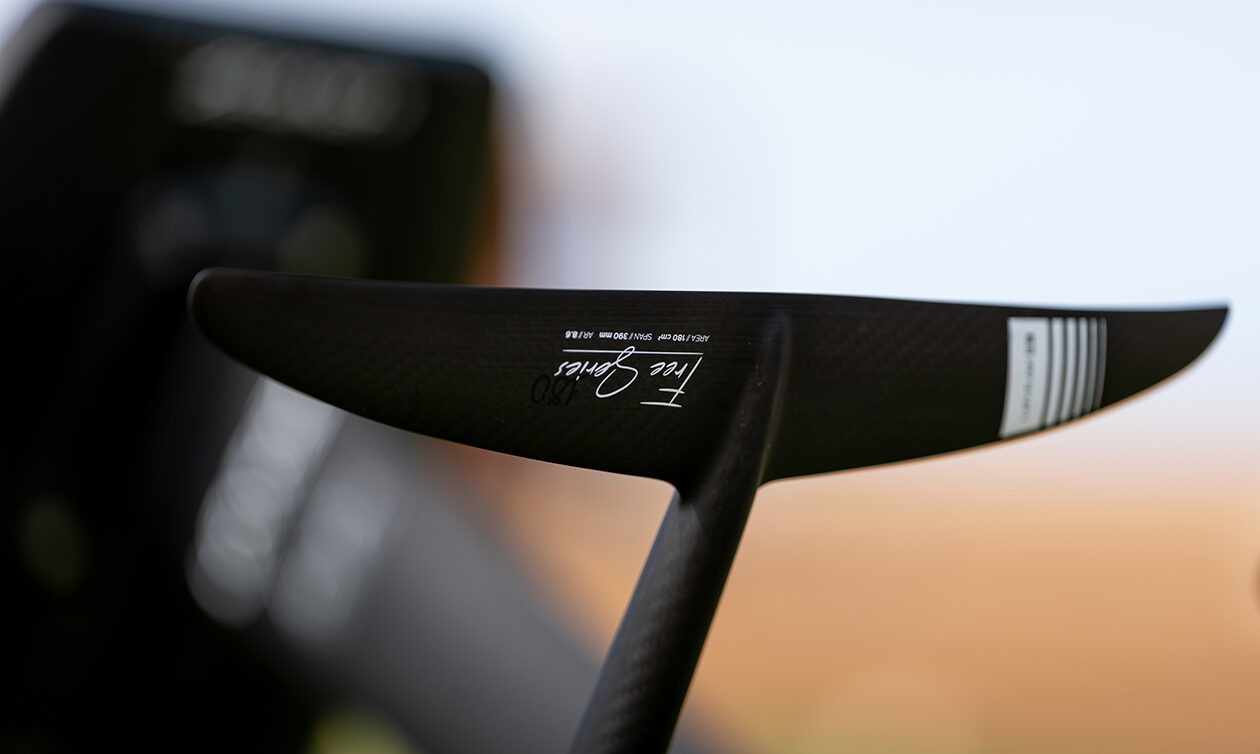
Compared with the Race Series, the Free Series uses a slightly more open mast-connection angle. The Race Series connection is extremely tight and optimized for maximum performance, but it requires more force when assembling and disassembling the foil. For the Free Series we kept a very stiff connection but made the assembly more user-friendly for everyday use. At the rear of the fuselage, the stabilizer connection surfaces are angled to guide the stabilizer into a centered position during assembly. At the same time, the surfaces remain as flat as possible to optimize fiber alignment in the carbon stabilizer. Avoiding strong curvatures also reduces resin-rich corners, which are areas where chipping can occur.

Give us some detail on the production methods you use for the titanium and carbon parts.

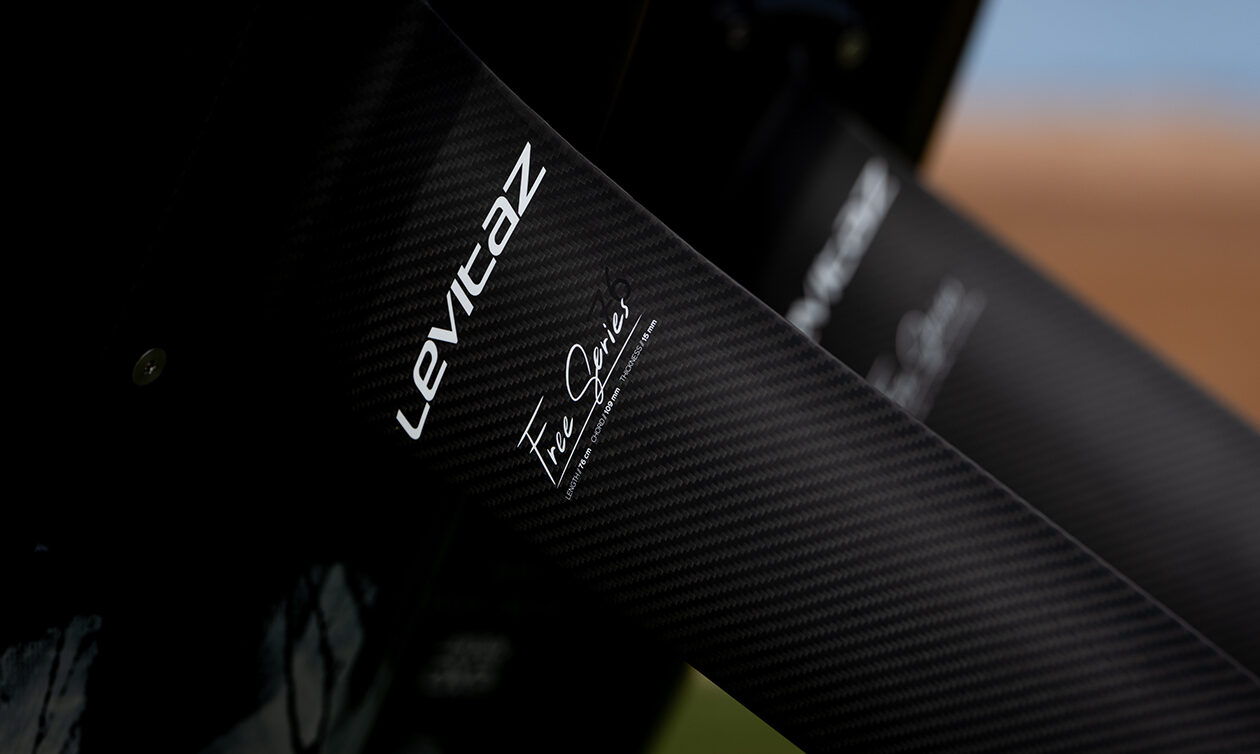
The titanium alloy fuselage is CNC-milled with high accuracy. Before production starts, sample parts are measured on our in-house measuring machine to verify tolerances in the range of 0.05 mm. The carbon parts are made from epoxy pre-preg high-modulus carbon fiber fabrics. We intentionally use high-modulus rather than ultra-high-modulus fibers here because this gives us a strong and durable balance of stiffness and strength. The front wing is molded around the fuselage, creating a one-piece front-wing/fuselage unit with a very direct feel on the water. Neither the front wings nor the stabilizers use foam cores, because the areas around the fuselage require solid strength. The masts use foam cores to build internal pressure during molding and to save weight in non-critical areas.

Is it difficult to bond titanium to carbon and how do you achieve it?

The bonding quality depends heavily on the curing cycle (temperature over time), material shelf life, cleanliness of the working environment, the treatment of the bonding surfaces, and the 3D design of the bonding surfaces. All these factors are closely monitored at the factory. The result is a play-free, strong connection that provides a direct feel and is designed to withstand the high loads of freeride use, including hard landings.

Do you do any bench testing to measure flex in the system, as well as computer modeling? Do the methods yield different results?

Analytical results are only reliable if properly validated against physical test results, especially when working with anisotropic materials. Thanks to our database of analytical and test-bench results, we can assess whether a part will meet our strength and stiffness targets. We evaluate strength and stiffness before we release mold manufacturing. Once prototypes are ready, they go through a series of test-bench evaluations to validate stiffness, strength and durability.

Which metric in terms of torsional, front or side loading is it most important to control for a precise ride?

It is less about one single metric and more about controlling the complete stiffness balance. This is ultimately something our team riders feel on the water, but from an engineering point of view the key is the right balance for each part. The anisotropy of carbon fiber laminates allows us to fine-tune bending and torsional stiffness. The optimum also depends on the setup (for example front-wing span), the discipline (race, freeride, wave, etc.) and the conditions. Therefore, we focused on fine-tuning each component for its specific field of application.

Is stiffness always a positive thing? Or can a little flex in the right places make for a more comfortable ride in turbulent water states?

Overall, a stiffer assembly gives a more precise and direct ride, but stiffness needs to be designed into the right areas rather than simply maximized everywhere. This is why we focus on tight connections throughout the assembly and on individually optimized profile thicknesses for each mast size. Riding comfort and ease of use come primarily from the hydrodynamic design of the foil: balanced tail volume, lift distribution across the front wings and other details of the wing shapes. These features enable a smooth takeoff, excellent glide and control at higher speeds, even in rough conditions. For us, that direct and controlled feeling is worth accepting some extra weight. ■

Want More?

You can get the latest goodness from the world of kiteboarding by subscribing to our print edition. You'll get 5 packed issues, plus a free tee and free digital access. And you'll be directly helping with our sustainability efforts too!

Check it out now
single-feature.php
Subscribe Today