Tell Me About It: Eleveight RS V10
Eleveight’s bestselling kite, the RS, is now in its 10th edition. We dived in with the team to find out how they keep pushing improvements on such a loved product.
THEKITEMAG ISSUE #67
When you purchase gear through links on our site, we may earn a small commission. Here’s why you can trust our tests and our affiliate partner.
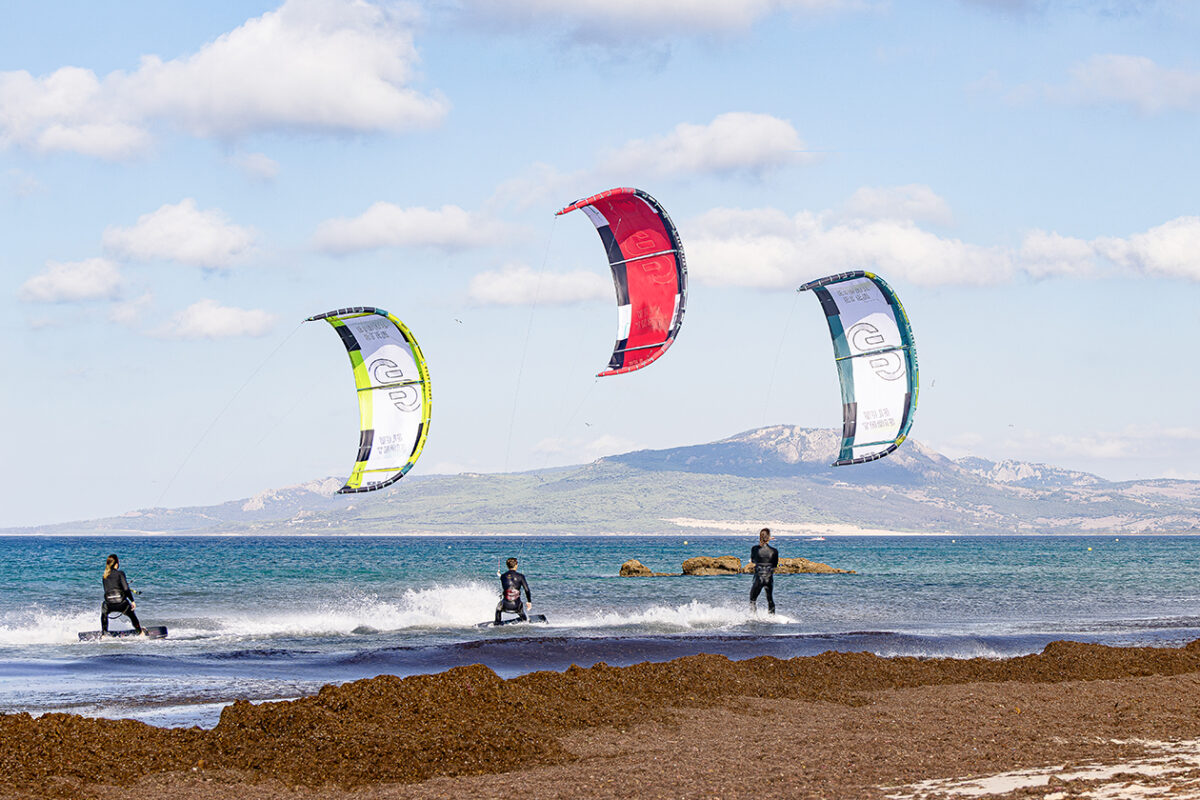
Eleveight’s bestselling kite, the RS, is now in its 10th edition. We dived in with the team to find out how they keep pushing improvements on such a loved product.
When developing each new edition, do you start the process with something in mind needs improving?
What’s striking about the RS hitting its 10th edition is that it really puts into perspective how far Eleveight has come with nearly a decade in the market already. Time genuinely flies, but from day one, the focus has always been the same: product, performance, and development. We’re passionate about creating high-performance gear, so pushing a kite forward year after year isn’t forced, as it’s a very natural process for us.
If you put the very first RS next to the V10, you’re actually looking at two quite different kites. The original was all about accessibility, with super-easy handling, plenty of grunt, and loads of hangtime. That DNA is still there in the V10, but the demands of the freeride segment have evolved massively. Riders today are pushing harder, especially with the rise of Big Air, and that’s reflected in how the kite performs now. The RS V10 is noticeably quicker in turning and looping, much more dynamic in the air, and built to handle significantly higher loads. Construction and durability have come a long way, too, and because modern freeriders really put their gear through its paces, we need the kite to be absolutely rock solid.
When we start developing a new version, there are two key pillars guiding us. The first is market feedback. Our global network and team riders are right at the cutting edge of the sport, so they give us invaluable insight on what works and where things are heading. They’re often the first to feel shifts in riding styles and customer expectations, so that feedback loop is crucial. The second pillar is internal R&D. With Peter Stiewe leading design, there’s a huge amount of experience and curiosity driving things forward. We’re constantly testing materials and refining construction. Sometimes the changes sound small on paper, like introducing a 6×6 ripstop in the trailing edge, but those details make a real difference in stability, durability, and overall flight performance. Ultimately, development is a continuous learning curve. The moment one version is signed off, we’re already thinking about the next. There’s always something to refine, something to improve. That mindset of never standing still is what keeps the RS evolving. We’re never tired of saying “development never stops” at Eleveight.
There have been many industry changes over the last 10 years. How do you get from V1 to V10 without the RS losing its identity?
10 years is a long time in kiting and the pace of change has been huge. Rider expectations have shifted, new disciplines have emerged, and what people demand from a freeride kite today is very different from what it was when we launched the first RS. That said, the core DNA of the RS has remained untouched throughout its evolution. From V1 to V10, it has always been built around the same fundamental platform: a three-strut design, with a medium sweep and a medium to high aspect ratio. Those elements define the character of the kite and are the reason it has always delivered that balance of accessibility, performance, and versatility.
The development journey is not about changing that identity, it is about refining it. Every new version is a series of small, deliberate improvements rather than big resets. We look at efficiency, balance, material behavior, and how cleanly the kite translates input into movement in keeping with the philosophy behind the RS. We are not chasing change for the sake of it. By holding on to a proven platform and continuously fine-tuning it, we can move the kite forward without ever losing the feeling that made it popular in the first place.
How much influence does customer feedback have on what you decide to change?
Customer feedback plays a huge role in how we move the RS forward. A big part of that comes through our network of shops and schools, which are spread across all the key kite locations worldwide. They’re dealing with completely different conditions day to day, whether that’s wind strength, water conditions, or temperature, so the feedback we get is incredibly diverse and very real. All of that input is very crucial for the next development stage. It helps us see patterns, understand where expectations are shifting, and identify exactly where we need to fine-tune or improve the kite in the next version. It is not about reacting to one opinion; it is about reading the bigger picture.
Because the RS sits in the freeride category, it needs to work everywhere, for a wide range of riders, with that true plug-and-play character and well-balanced performance. To achieve that, you have to listen closely to everyday riders and customers, not just top-level athletes. This is actually a key difference compared to more niche products. In those cases, we rely much more heavily on team rider input because the performance demands are very specific. But for the RS, the voice of the general rider is absolutely central to how we shape each new version at Eleveight.
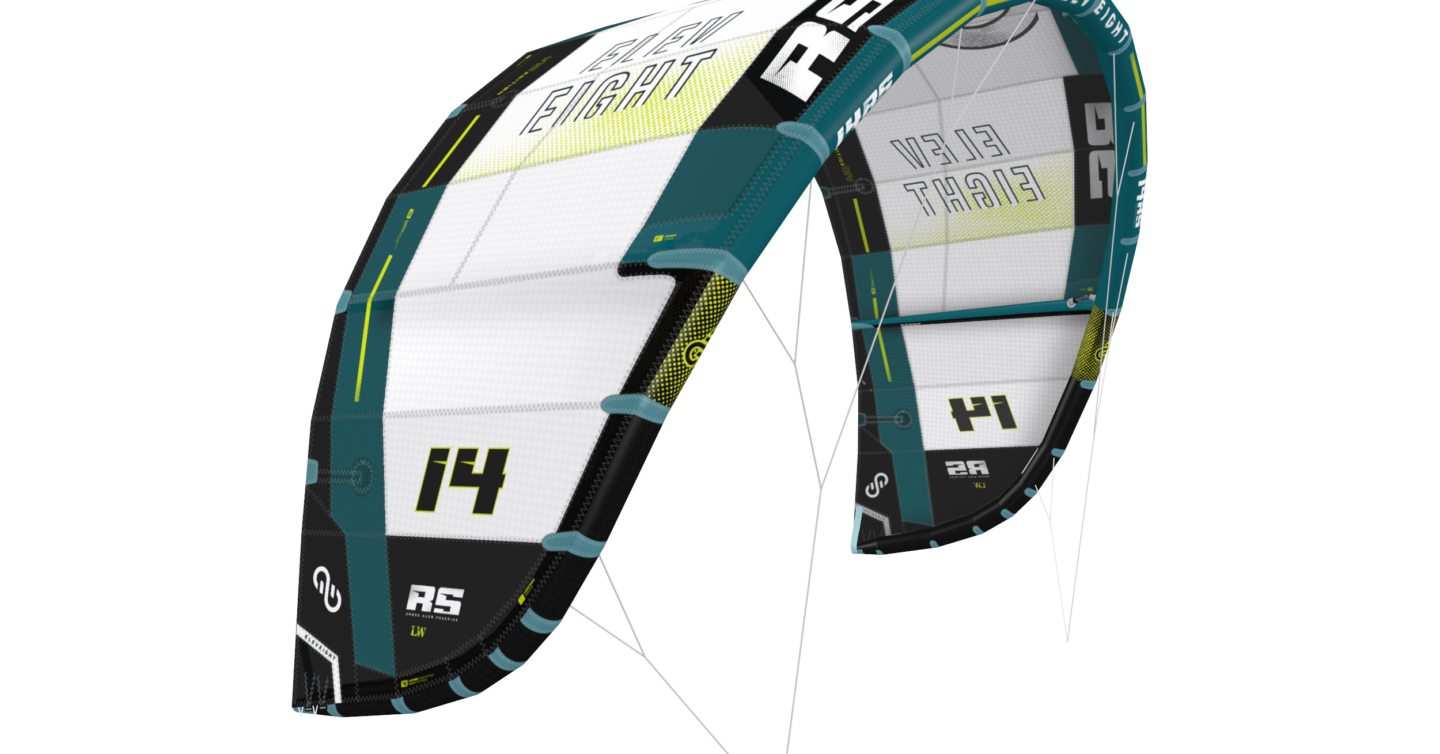
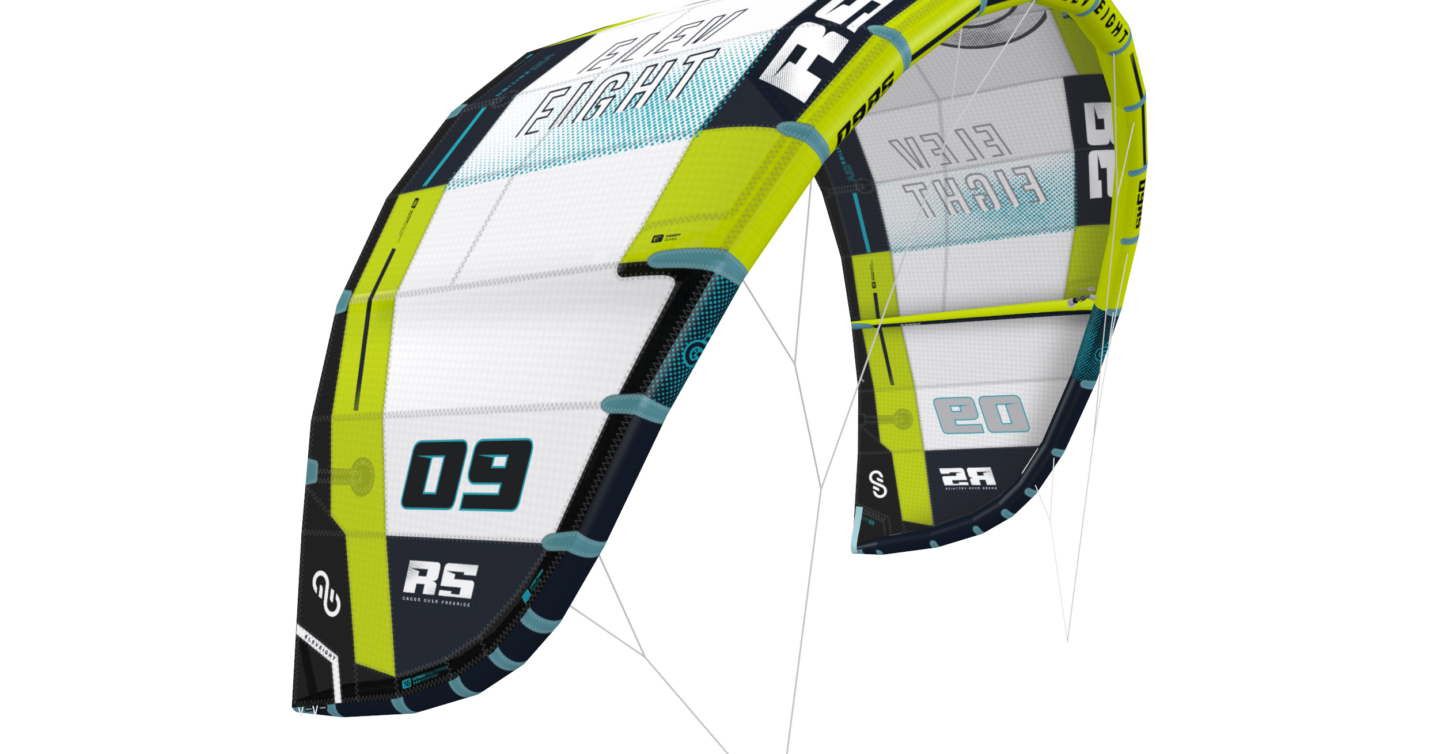
What specific performance updates did you want to make for this iteration?
For the V10, we went into the development with some very clear targets. One of the main areas was improving the turning speed, along with slightly reducing the bar pressure. Both of these changes are especially important for looping, which has become a key part of modern freeride riding, crossing over to Big Air. At the same time, we were aiming for a kite that feels very direct and dynamic in the air. That immediate response gives the rider more confidence and control, particularly when pushing into bigger jumps or more aggressive riding. Another big focus was maintaining strong form stability under load. As riders are generating more power and putting more stress through the kite, it is essential that the structure holds its shape perfectly. That stability is what allows the kite to perform consistently, even when it is being pushed hard. So overall, with the V10 it was about making the RS feel faster, cleaner, and more precise, while still keeping that dependable character that defines the range at Eleveight.
Give us more detail on the design and construction changes.
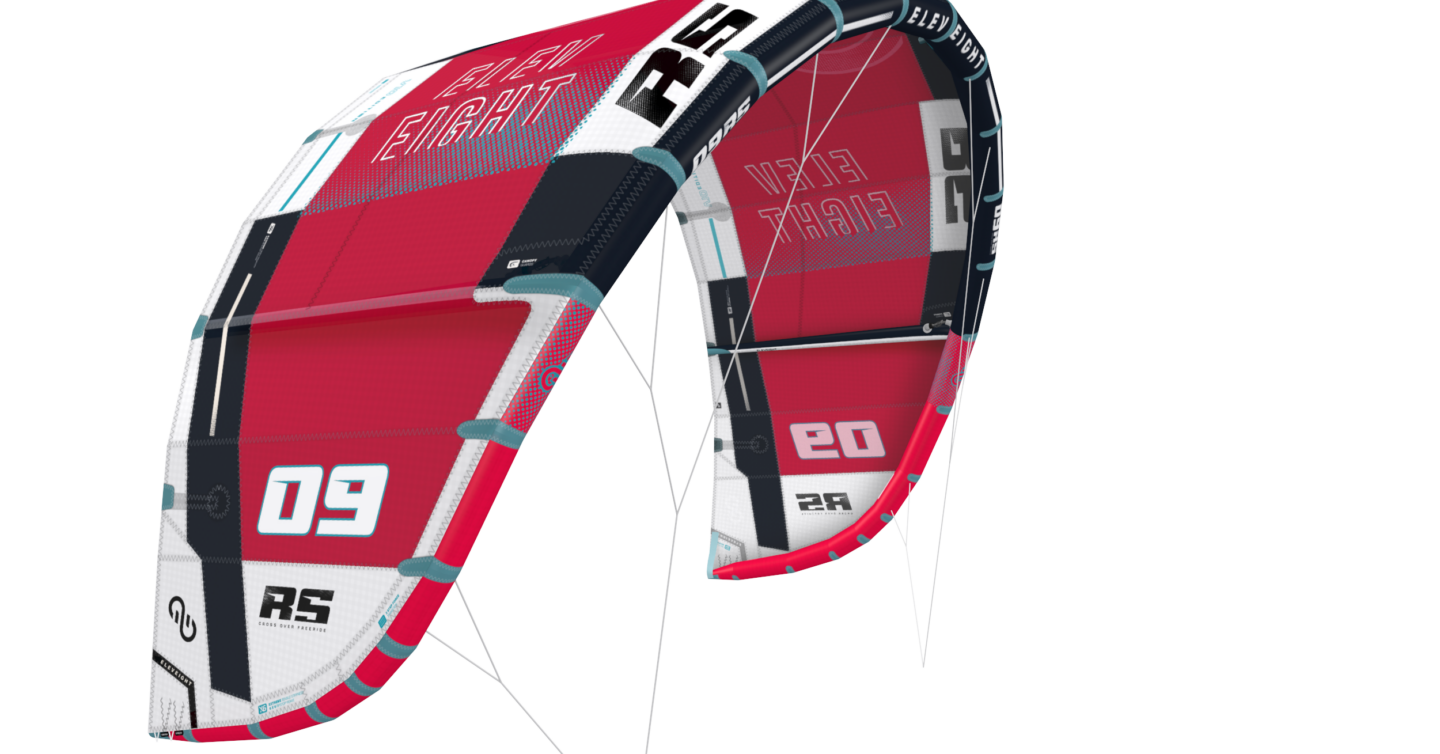
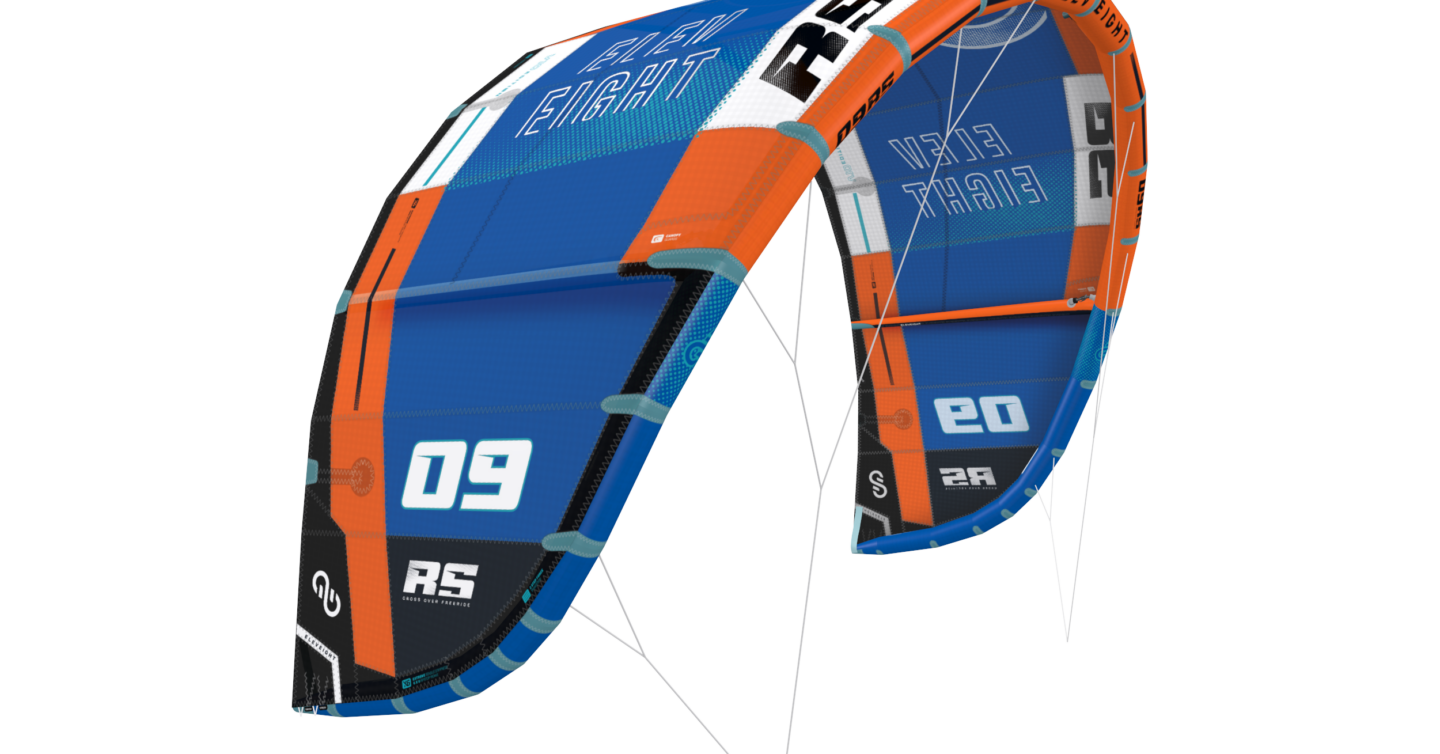
There are quite a few changes under the hood, even if at first glance the kite might look familiar. The biggest one is the move to a six-point bridle. Previously, we had five attachment points along the leading edge, and adding that sixth point allowed us to reposition the tow point more precisely. It might sound like a small tweak, but it has a big impact on how the kite behaves. In a way, it is similar to the shift away from pulleys in kite design. A cleaner, more fixed setup tends to feel more direct and faster. With the six-point bridle, we achieved noticeably better turning control and reduced bar pressure. At the same time, it brings more stability to the arc and wingtips, which also helps reduce the chance of bridle catch. We also refined the overall geometry, working on the aspect ratio and especially the tip profiles. The new tips are designed to reduce drag during turns and loops, while the center section carries a bit more surface area where the main lift is generated. It is quite technical in theory, but on the water the result is very clear. The RS V10 generates more lift and feels significantly quicker through turns.
On the construction side, we have pushed durability and structural integrity further. The leading edge now features a triple closing seam for maximum strength, and the trailing edge is reinforced with a 6×6 ripstop to improve load distribution and maintain canopy stability under pressure. We have also introduced a new push-lock valve, which makes inflation easier and integrates more cleanly into the main bladder. All of these updates come together to make the RS V10 not just more performance-driven, but also stronger and more refined overall.
Will development ever plateau where models won’t need to be updated yearly?
Kite development has definitely slowed compared to the early days, which is a natural progression as the sport matures. A lot of the big leaps have already been made. That said, disciplines like Big Air have pushed things forward again in recent years, raising the bar in terms of performance and durability. Modern kites need to handle huge loads and extreme conditions, and that continues to drive development. Whether products need yearly updates really depends on the brand and its philosophy. At Eleveight, we have always been very product-driven, with a strong focus on performance. Our team lives and breathes watersports, so development is not something we force; it happens naturally through constant testing and refinement.
For us, both small and larger improvements matter. But it is important to say that updates should not happen just for the sake of having something new to talk about. That can quickly become confusing or even misleading for customers if it is purely marketing-driven. Our approach is simple. We release a new version when there is a meaningful step forward. Because we are ambitious with our R&D and we listen closely to feedback, those improvements tend to come through consistently. So while development may not be as dramatic as it once was, it certainly does not plateau. It just becomes more refined and more focused over time.
Have you made similar changes to the latest RS+? How should riders choose between the RS and RS+?
Both kites share the same core DNA, but they are clearly aimed at slightly different riders. The main design updates we introduced for the RS V10 have also been carried over to the RS+, so in terms of geometry and overall concept, they are closely aligned. Where they really differ is in the frame construction. The RS+ uses a high-modulus leading edge material, XTC TEX 2.0. This allows for a thinner and stiffer leading edge, which reduces weight but, more importantly, makes the kite feel more responsive and dynamic in the air. You get a much more immediate reaction to input, with a very direct, performance-driven feel. Because of that, the RS+ is targeted more towards the sportive rider who is looking for that extra level of performance and feedback. To really benefit from it, you need a certain level of riding ability, so it naturally suits intermediate to advanced riders who want to push their limits. The RS, as part of the Prime range at Eleveight, is still very much a performance kite, but it is tuned to be more balanced overall. It has that plug-and-play character, works across a wide range of conditions, and is accessible to a broader spectrum of riders. So the choice really comes down to how direct and performance-focused you want the kite to feel versus how much versatility and ease of use you are looking for.
Posito is obviously enjoying the new RS on this issue’s cover. What did he or any other rider have to say about the latest version?
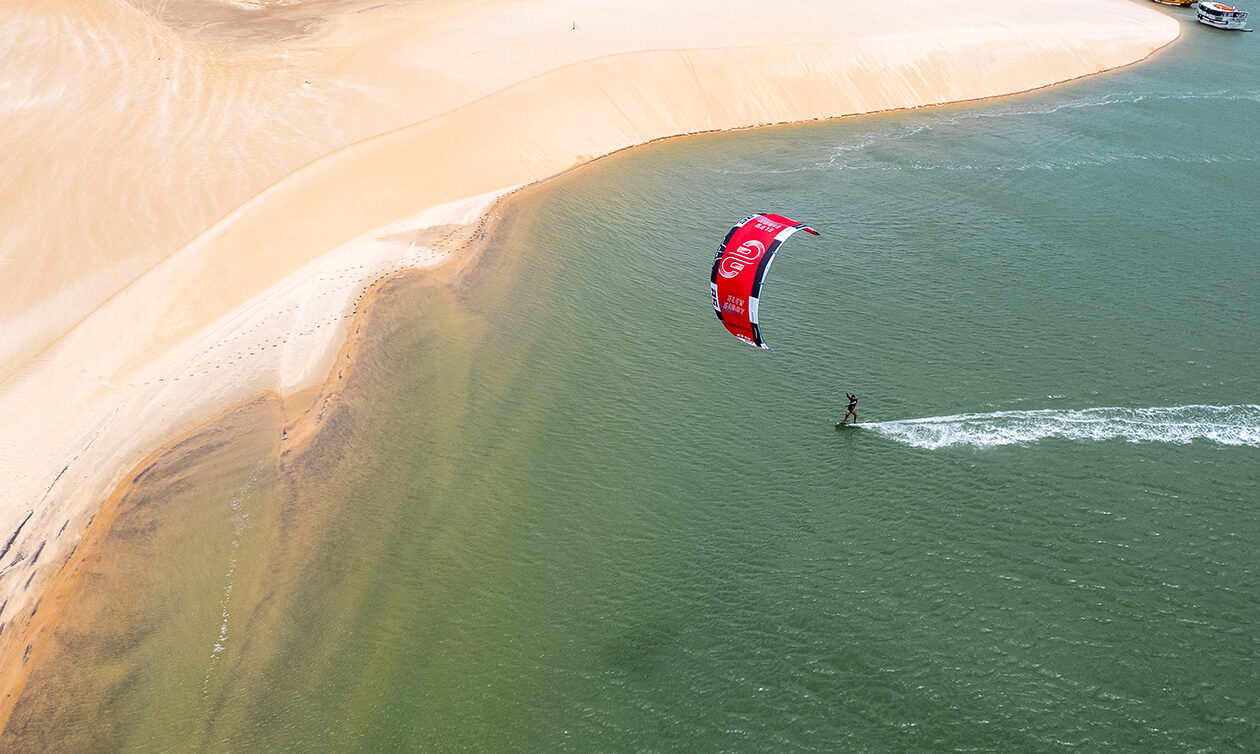
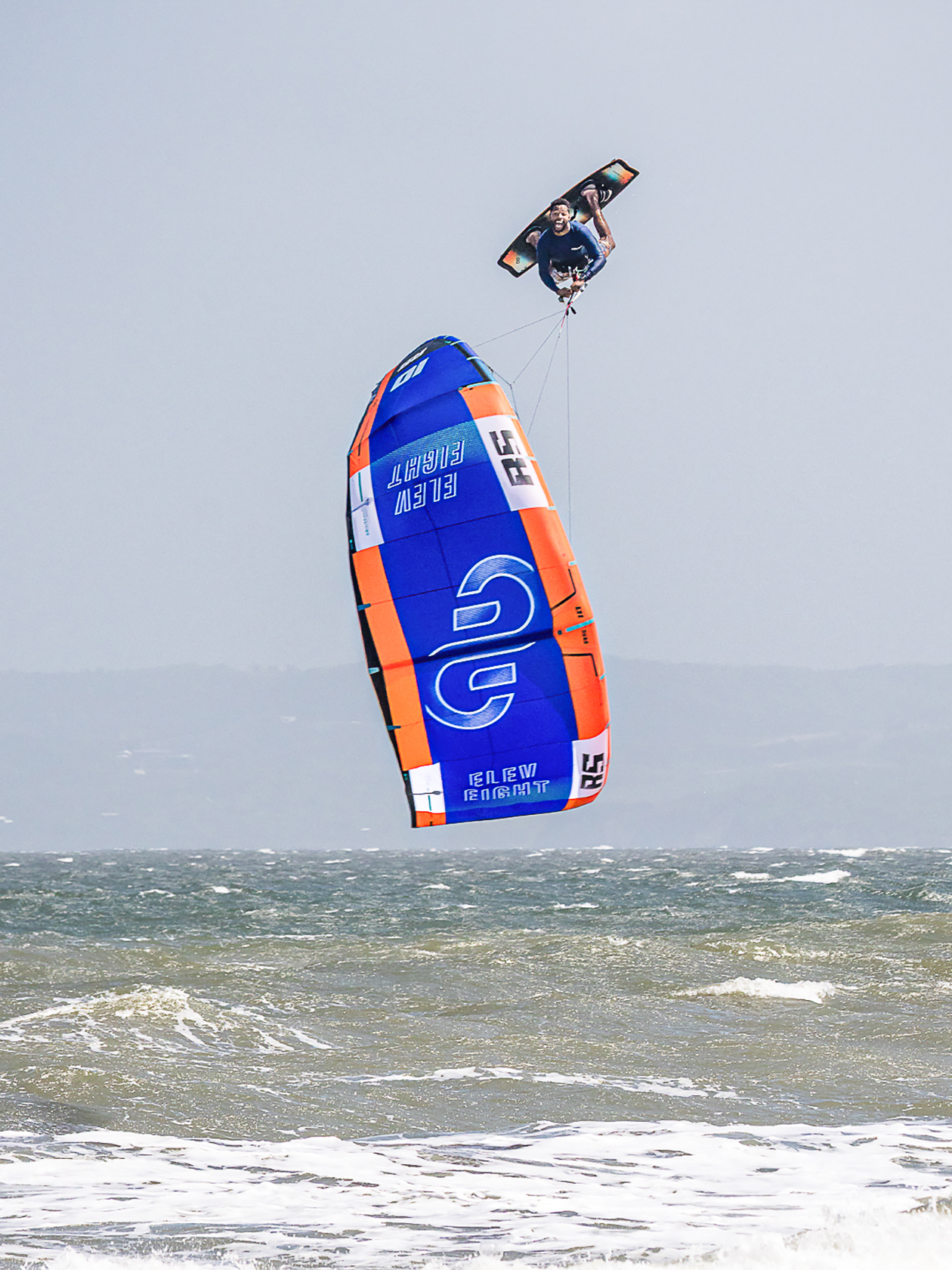
The guys had the kite in their hands quite early in the process, which allowed us to gather feedback for the next development step already. Across all riders, the reaction was very positive, almost overwhelming in fact. What stood out most was that our initial intention came through clearly. We wanted to make the kite a bit faster in turning and a touch lighter on the bar, and that was immediately recognized by everyone who tested it. Especially in the high-performance segment, like kiteloops, the kite now feels more radical and significantly quicker through the turn. The cover shoot with Posito is a good example. He came back really impressed, not just with the loop speed, but also with how controllable the power delivery is throughout the loop. That is always a great confirmation for us, when the feeling on the water matches exactly what we had in mind during development. We also got very positive feedback on the crossover abilities. In waves, the RS drifts well even in lighter wind, and with a small bridle adjustment, you can switch to a more pivot-style turn. That gives a very fast, low-power response which works really well for strapless wave riding and adds a lot of versatility to the kite! ■

You can get the latest goodness from the world of kiteboarding by subscribing to our print edition. You'll get 5 packed issues, plus a free tee and free digital access. And you'll be directly helping with our sustainability efforts too!
Check it out now