After a victorious run at the Olympics, did now feel like the right time to introduce a new freeride range?
Yes, absolutely. For us, the timing felt right because the technical foundation was there. Over the last few years, race development has shown us very clearly where the critical loads sit in a foil system, which interfaces really matter, and what creates control and trust at a very high level of riding.
At the same time, this was also the right moment to take a clear next step in freeride. Since the beginning of the brand, our freeride system had remained compatible over many years, and that kind of long-term thinking is still very important to us. With the Free Series, we are now deliberately introducing a new platform that is once again designed for long-term future-proofness. For our customers, that means stepping into a system that is not built for the short term but intended to carry them forward for many years.
The Free Series is therefore the logical translation of our high-performance development experience into a platform that is more accessible and broader in use. So for us, it was not about moving away from race, but about deliberately applying what we had learned there to a freeride-oriented system.
And how does it fit in to your existing ranges? Why choose the Free Series over one of your other ranges for kite foiling?
The Free Series replaces our previous freeride platform. It is our new multi-disciplinary freeride system: performance-oriented, practical for everyday use, and designed to cover a broad range of applications within one clear platform. It is not a simplified Race Series, but it clearly benefits from the same development mindset: stiffness where it matters, very precise load transfer, durable interfaces, and a clean, controlled feel on the water.
For kite foiling, the distinction is quite clear. Riders looking for a highly specialized race product with maximum competitive performance are best served by the Race Series. The Free Series is aimed at riders who want a sporty freeride platform: precise, fast, confidence-inspiring, and technically clean, but without the complexity and narrow specialization of a pure race product.
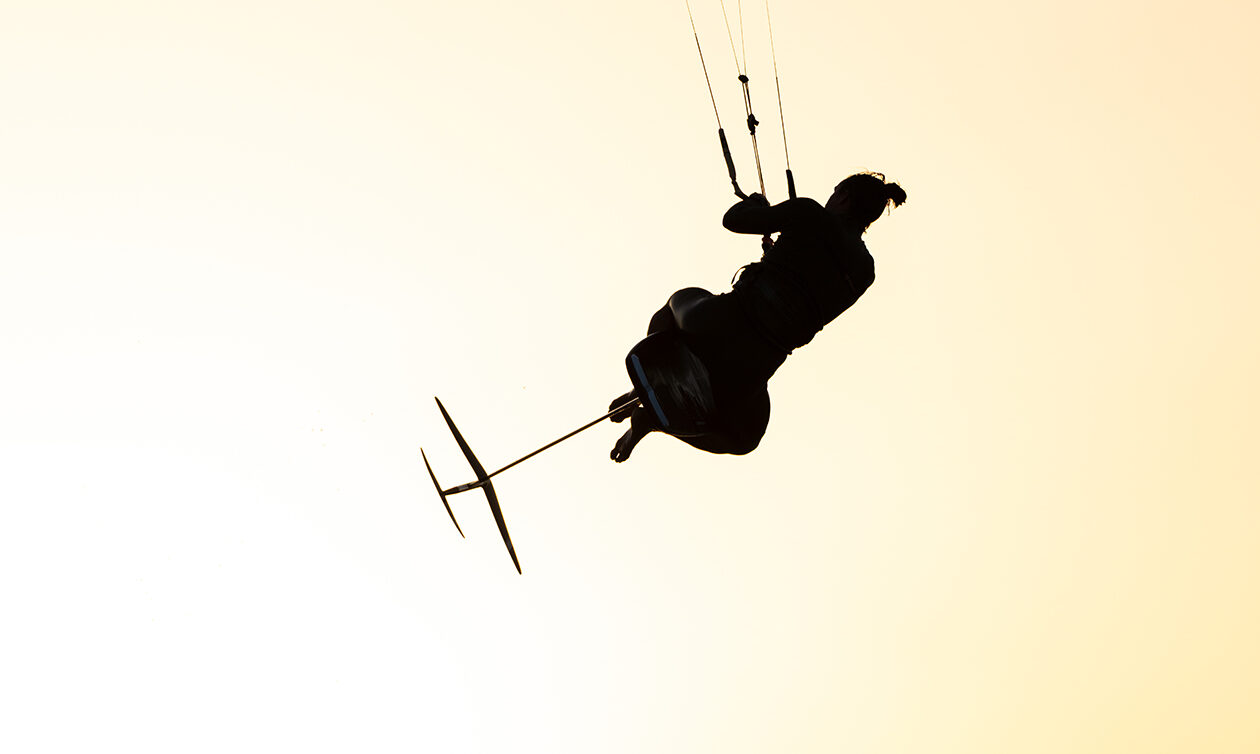
At the same time, the Free Series is deliberately broad in its kite application range. Whether it is kitefoil Big Air, freeracing, or classic kitefoil freeriding, with straps or strapless, with foil kites or LEI kites, with small or large kites: within the platform, there is a suitable configuration for very different riding styles and preferences. That is one of the major strengths of the system – a broad range of use without becoming vague or unfocused.
Talk us through the construction and profile of the wings and masts. How have you achieved maximum stiffness?
The key point is that we did not want to achieve stiffness through one single feature, but through the overall system architecture. Front wings, stabilizer, mast profiles, and interfaces were developed together, because stiffness only becomes truly meaningful when the load path through the entire foil remains controlled and consistent.
Our masts are length-specific designs and not simply one profile offered in multiple sizes. Each mast has its own taper, its own construction, and its own tuning for the intended use cases. With the wings, meaning both the front wing and the stabilizer, the focus was on clean force management and a well-balanced overall system, while with the mast profiles we followed a race-derived approach: low drag, high stiffness, and very precise behavior under dynamic load.
A major contribution also comes from the interface concept. The integrated titanium insert in the front wing and the overall connection design create a very direct, play-free transfer of load. That is exactly what the rider feels as control, precision, and trust.
How many wings and masts are on offer and which would be most suitable for kite foiling?
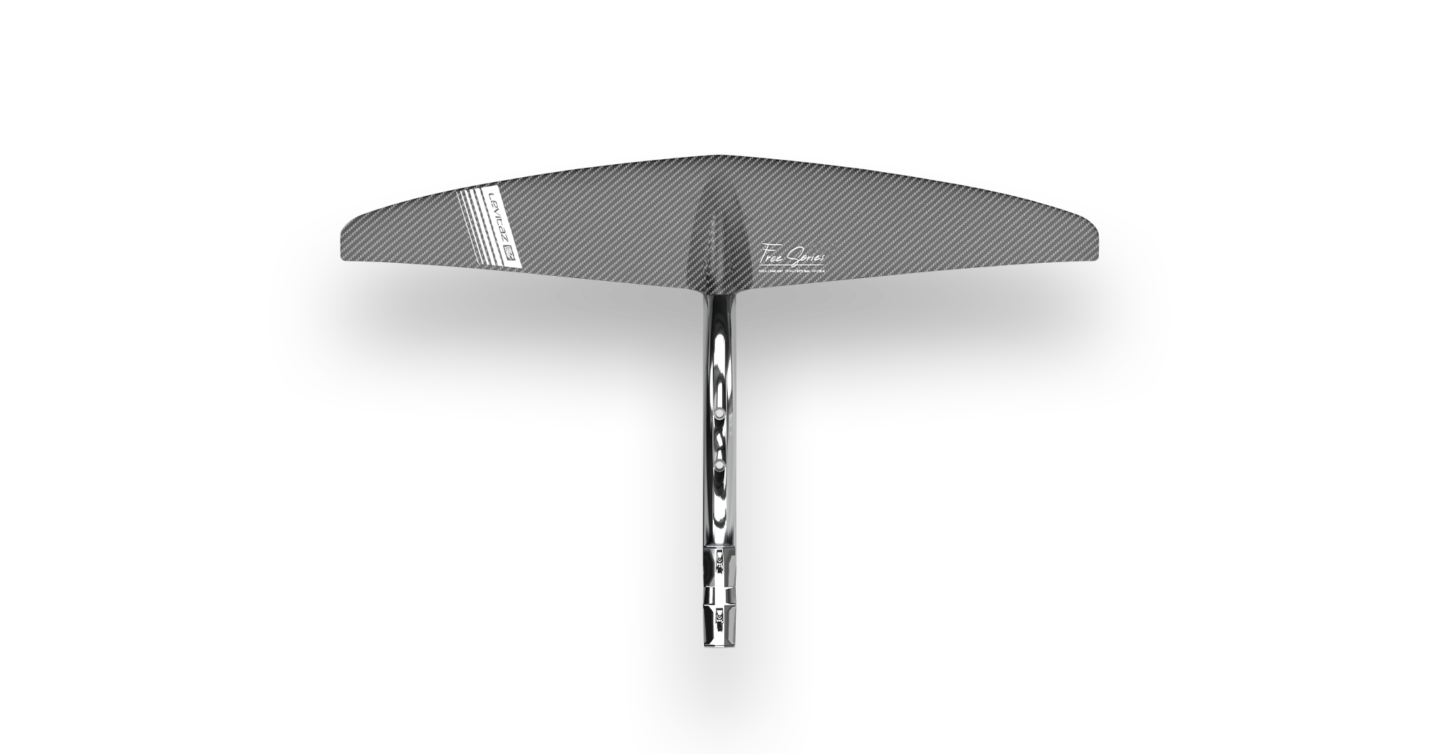
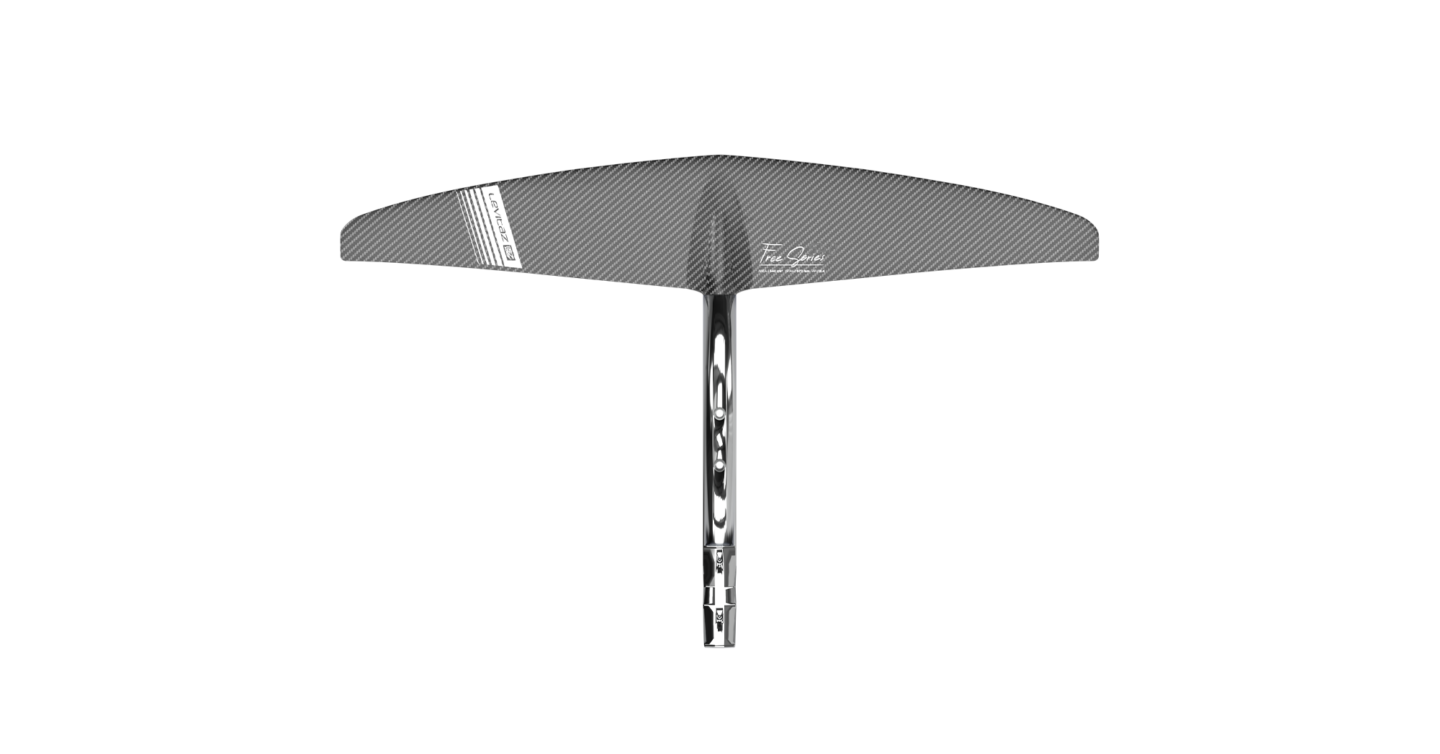
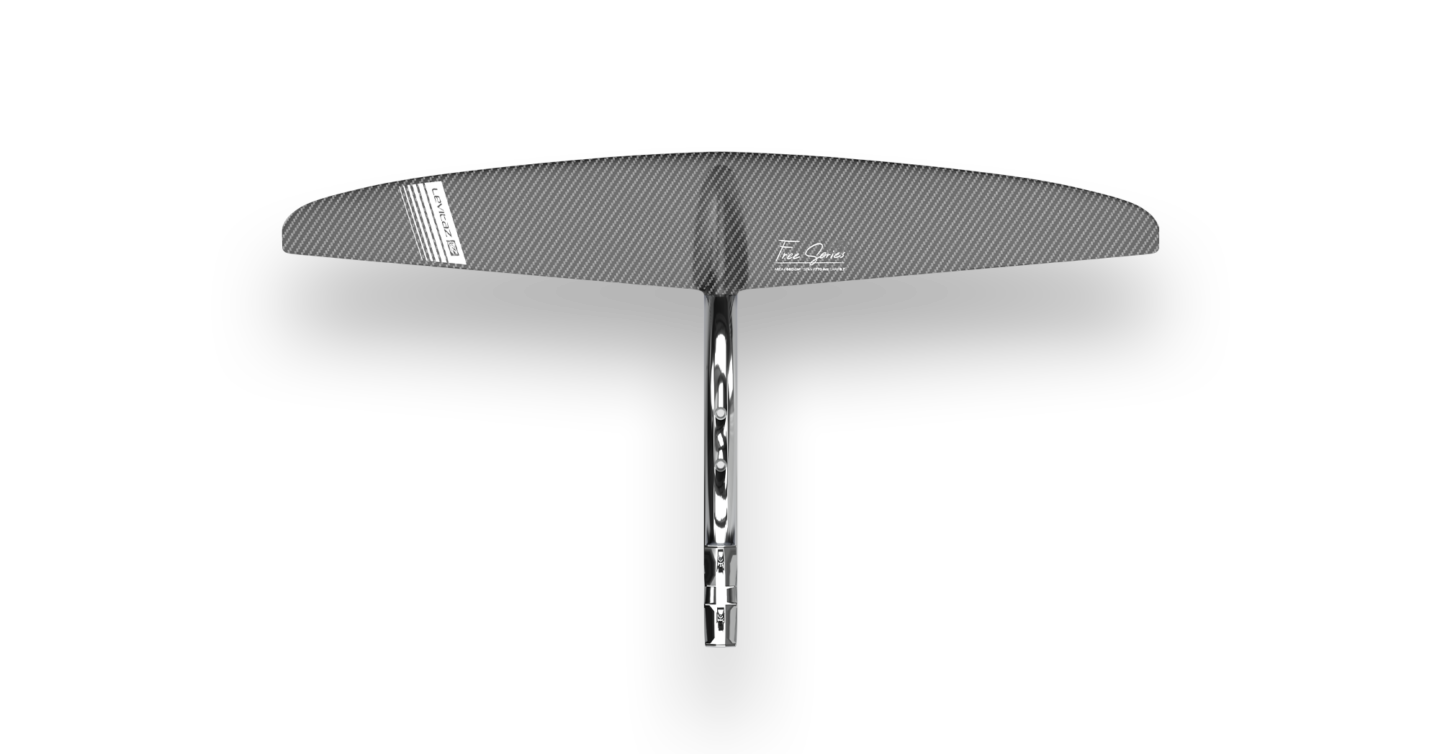
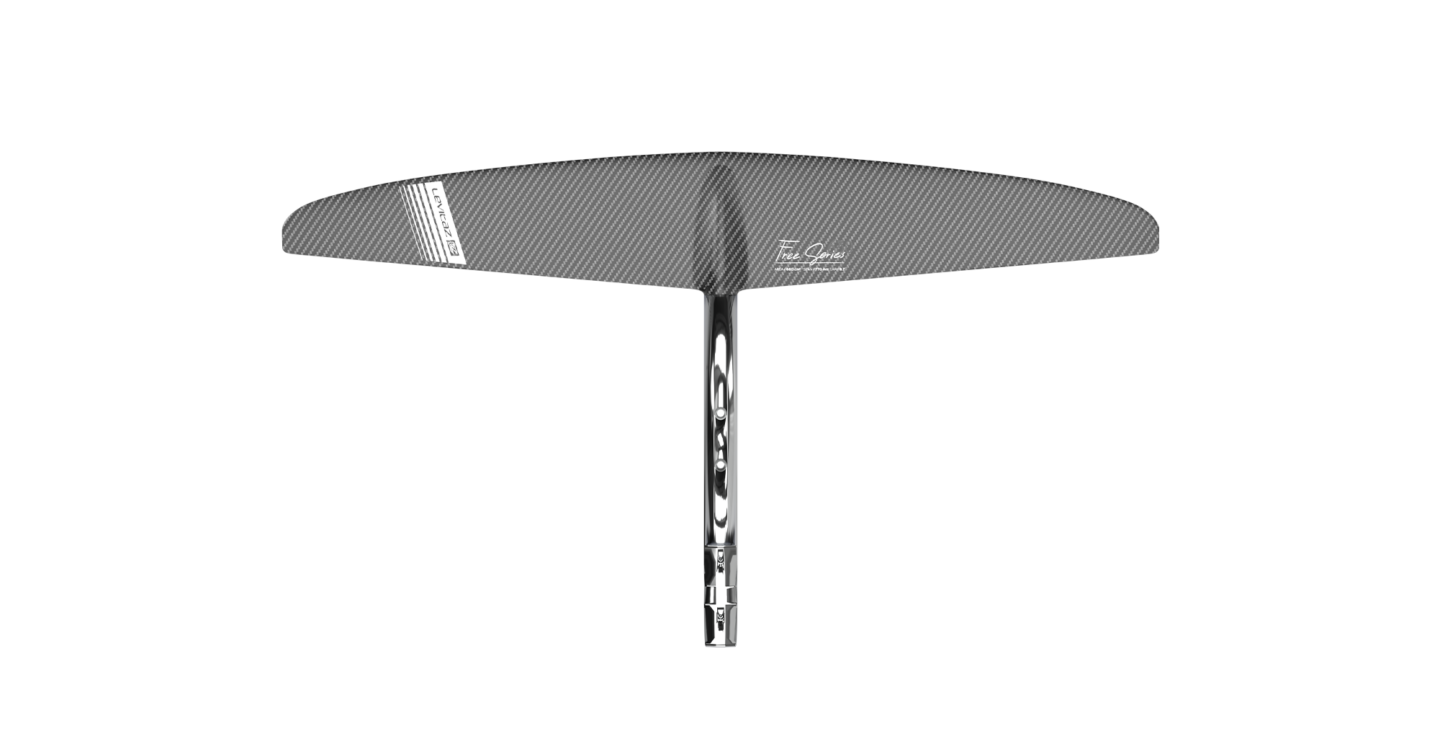
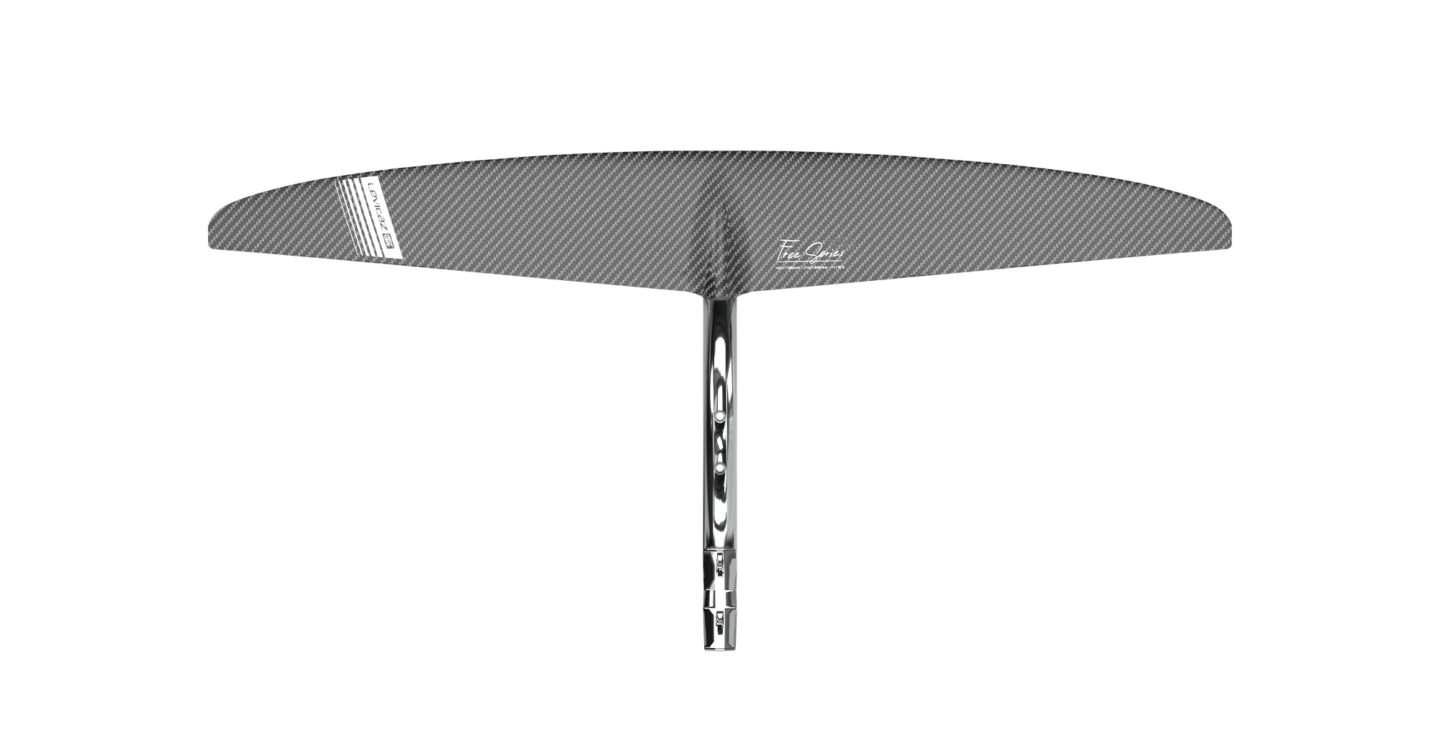
The Free Series launches with four front wings, one universal stabilizer, and three mast lengths. This is a deliberately focused platform rather than an overloaded range.
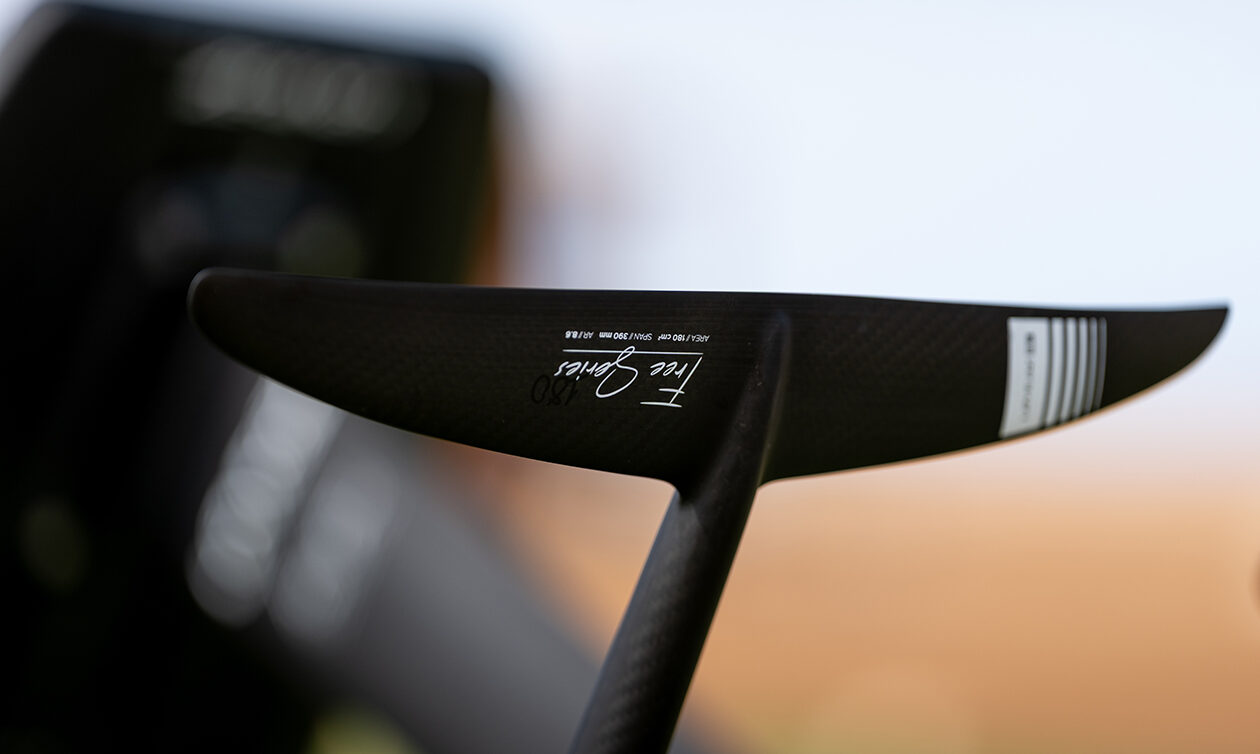
For kite foiling, the 540, 680 and 790 are the most relevant wings. The 540 is the sportiest and most direct option, ideal for riders looking for maximum top end, a freerace-oriented character, and Big Air potential. The 680 is the strongest all-round wing in the kite range. The 790 is especially interesting for riders who want more glide, easier access, or a setup that also works well with very small kites and at lower speeds.
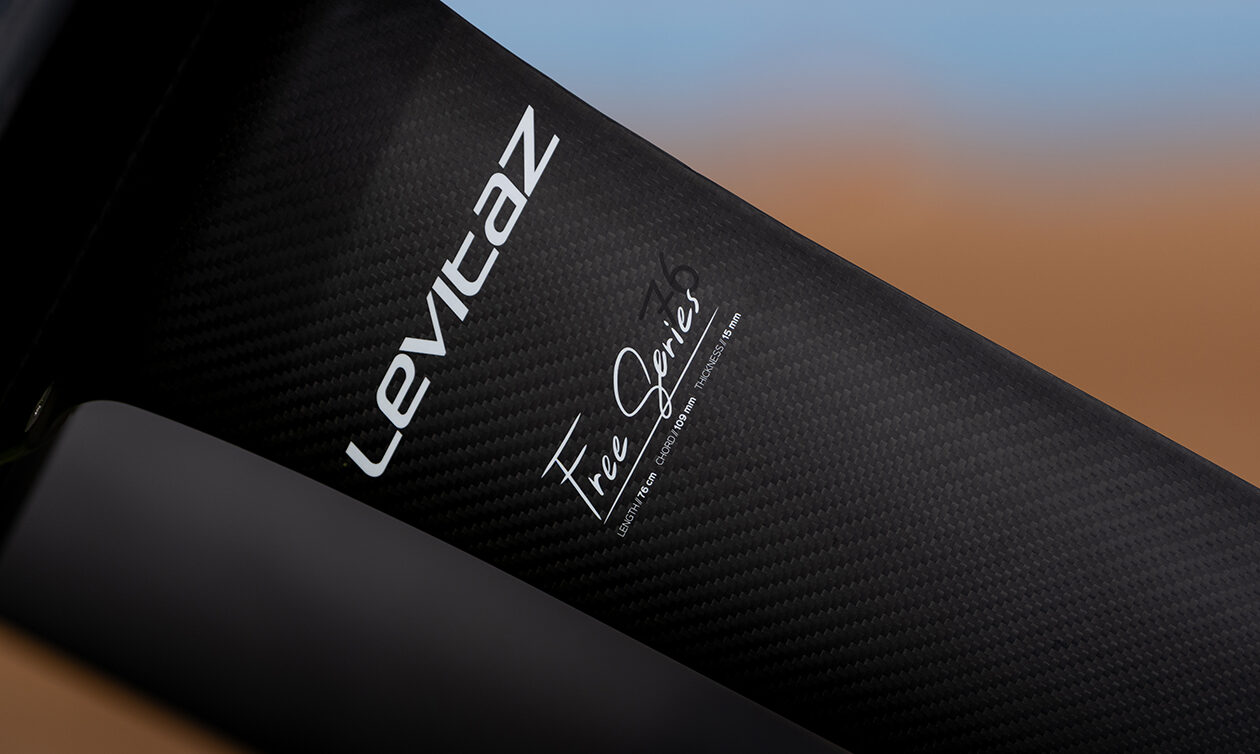
On the mast side, 84 and 96 cm will be the most relevant for most kitefoilers. The 84 is the all-round starting point, while the 96 gives more height and reserve in faster or more open-water conditions. At the same time, there are of course many shallow spots where longer masts simply do not make sense. So even though the development focus of the 76 was not primarily kite foiling, it is still absolutely relevant for those locations.
Why have you opted for a titanium fuselage rather than carbon?
Not everything in the fuselage area is made from titanium. Our stabilizer already incorporates half of the fuselage, and that section is carbon. The box area and the transition from the mast into the front wing, however, are the most critical zones in the whole system. And that is exactly where we use titanium, because this is where it makes the most engineering sense. This has been part of the LEVITAZ approach for years: combining precise metal interfaces with high-end carbon structures to create a play-free, bombproof connection exactly where it matters most.
Titanium gives us very clear advantages in this area. It allows for a strong, compact, corrosion-resistant interface that stays precise over time and keeps the system feeling tight and trustworthy, even after a lot of use. And if you look at the market today, you can see more and more brands moving towards this kind of hybrid metal-carbon solution. For us, that is not a new direction at all, it is something we have believed in and built around from the beginning. Especially with the large spans and high-aspect designs we see today, a purely carbon interface often becomes either too thick or less convincing in terms of long-term durability.
Of course, there is always a trade-off. If you want maximum stiffness and long-term durability, you usually have to accept a bit more weight. But the more important question is where the rider sees real value in everyday use – in saving a few grams in the showroom, or in having a foil that still feels precise, play-free and reliable after many sessions and many years of use. That is the kind of premium we believe in.