When you purchase gear through links on our site, we may earn a small commission. Here’s why you can trust our tests and our affiliate partner.

The Creators | Ewan Jaspan

This certainly isn’t the first time Ewan Jaspan has appeared in our mag, but now he’s firmly entrenched as Head Kite Designer at Naish and has been beavering away on the latest iteration of the Psycho NVision, as well as being kept busy as a new dad, we thought we’d throw him some questions to find out about his new babies… 

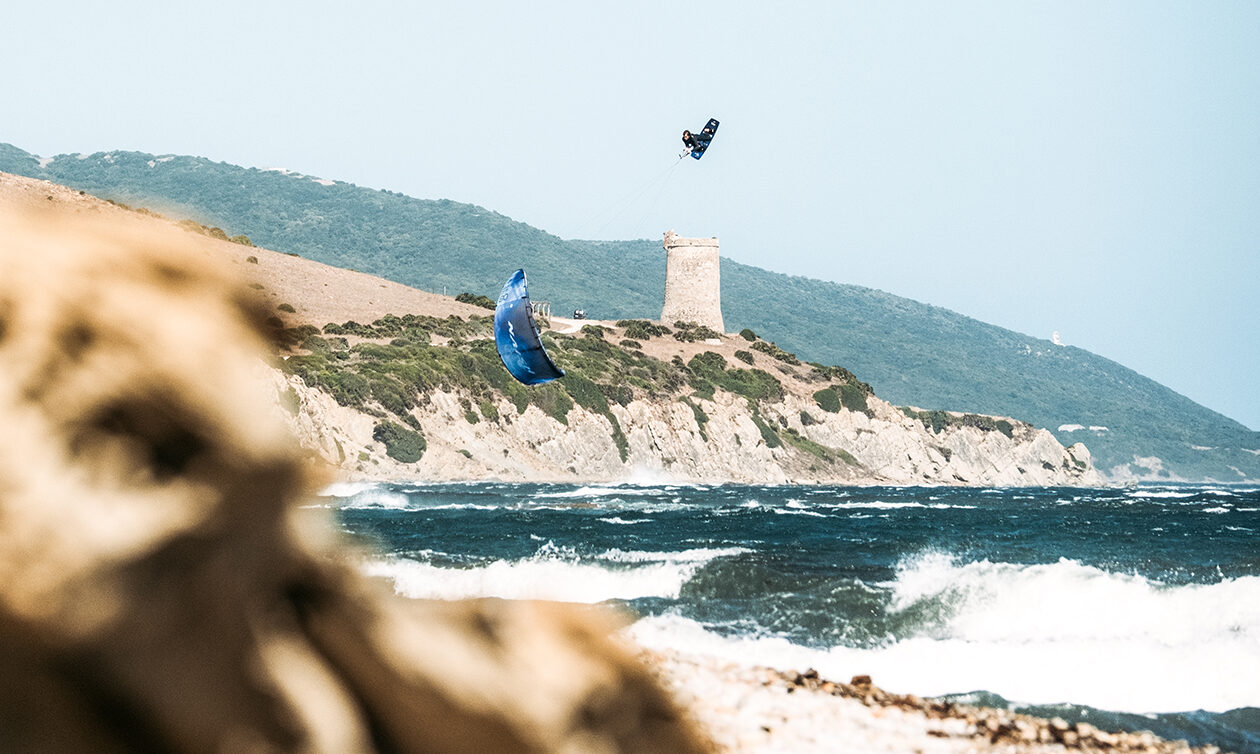
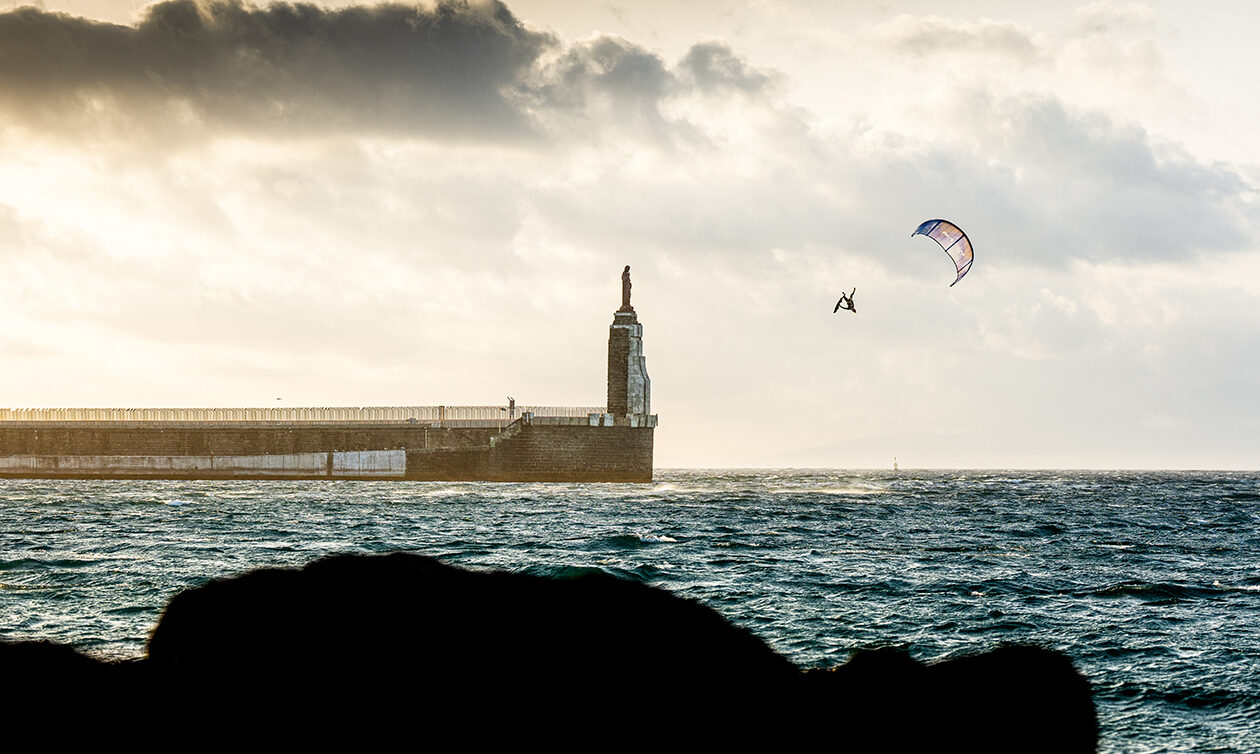
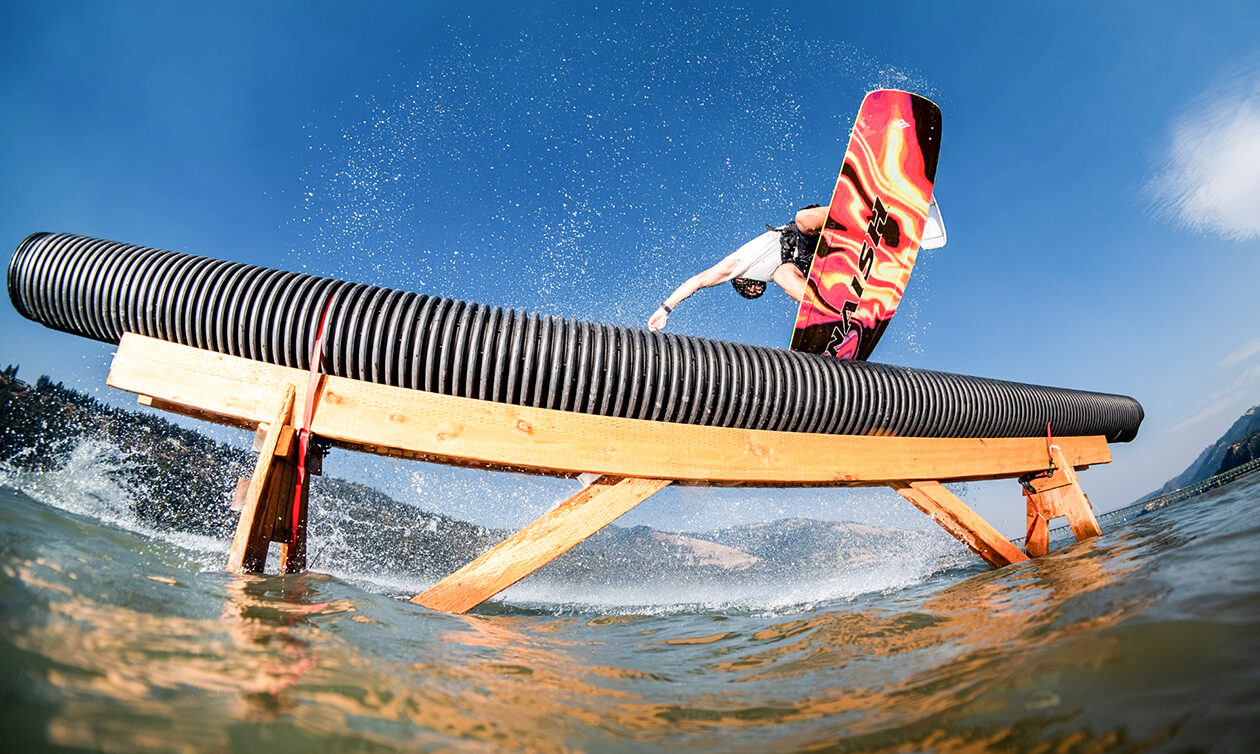
Photos Andre Magarao & Samuel Cárdenas

THEKITEMAG ISSUE #69

You’ve been kiting for a long time! Tell us about your very first sessions and how you got into kiting in the first place. Was it love at first sight?!

Wow, my first sessions… That would have been around 2005 when I got my first proper power kite. I had been flying stunt kites since I was a kid, and when we moved from Scotland to Australia in 2004, my parents and I were looking for a hobby for me. We lived right near the main kite beach in Melbourne and I guess it was love at first sight, as it was instantly what I wanted to do. I started with a Peter Lynn power kite, jumping on the beach, learning rotations etc., and then progressed to riding a skim board in the shallows. Around the end of 2006 or start of ’07 I got my first LEI kite, a Best Yarga 7m from 2004, and took it from there. I do still remember my first sessions, most memorably my first backroll. Living across from the beach was great and it meant I basically lived down there, much to my parents dismay when there was school work to be done… I guess it all paid off in the end! 

You did an awesome interview for our Tangled Lines slot in issue 60. For those of our readers who haven’t read that, please give a summary of how you went from team rider for Naish to their Head Kite Designer. 

It was a fairly streamlined process and a lot of being in the right place at the right time. I have always had a strong interest in gear and tuning kites etc. When I first really got involved was leading into the covid years and a break with our previous kite designer Brian Dennis. I was helping a lot with him and Des doing testing and then sitting with him watching while he did the computer work, observing and learning. After a while, winging started to really take up a lot of his time as it was moving so fast, and I started doing a lot of small tasks for him, learning more and more, and doing more and more. At some point it began feeling like I was actually doing the majority of the work so I approached Brian, Robby and Andy and asked if I could legitimately move into more of a formal position in R&D, as at the time I was still on a team rider contract. After many discussions of how it would work, I moved to the USA to start the job and really just dove in head first. Spending a lot of time out in Maui in the first few years, based out of Hood River, it was a dream job. Can’t thank the team enough for helping me into the position and trusting me to take it over from there. 

How does your experience as a top level rider influence the design process?

I think it is one of the most important things for me in terms of my design. Testing is all important, and being able to ride all disciplines of kiting at a high level means that I feel confident in my testing and own feedback. I know what riders want in their kite, be it wave, freestyle, Big Air, foil, as I can push it to fairly high levels all around. I have also just spent so much of my life with a kite in my hands that I feel really in tune with the gear, and can feel minor changes well. I think this really helped me at the beginning especially. I had no idea how kite designers could design high-end kites without flying them. Now that I am more experienced I can make a pretty good kite just from the program, but I still rely on my own (and obviously our testing team’s) feedback to really polish a kite and know exactly what to do next. 

Your personal life has changed a lot since the interview in issue 60 as you’re now a dad, congrats! Has much changed for you at work over the last couple of years, and what gear have you been working on?

Yeah, things have changed a lot, but day to day, everything is still about wind sports. Being a dad definitely means spending a lot more time managing/juggling everything, but so far in the first year it is more about spending time with him and feeding/sleeping haha. I am sure it will get more tricky when he isn’t happy hanging at a windy beach and wants to go to the park instead (hopefully the kite park…). But in terms of what I am working on, it’s a constant evolution. Obviously in the last year or so, parawinging has taken off and I have added that to my design roster. That has been a huge learning curve but also very rewarding. Kiting is still moving all the time; between materials, Big Air innovation, and trying to get our kites leading the pack in all disciplines, there is always something to do.

Let’s talk about the Psycho NVision, Naish’s premier high-performance Big Air kite. You worked on the first iteration – what performance characteristics did you want to update or maintain for the new version?

Yeah, this has been a huge project, and the kite I have spent the most amount of time on in the last two years. We firstly wanted to change the construction to get a lighter weight, higher performing kite at a lower price point. We also wanted to make a more intuitive bar feel and easier steering kite, that had insane vertical pop. Some of the feedback from the first one also was that it went huge, and had a lot of power, but became a little unruly in the top end, so working on the top end was also imperative.

The Psycho’s construction has had a major update with the introduction of Ultrasonic Tec on the leading edge. Please explain the technology behind this and how it was developed. What challenges did you face in implementing it?

So this technology is basically welding the LE into one continuous panel, so that the LE acts as one. This transfers the steering input smoothly and quickly throughout the kite, resulting in a really reactive and fast steering kite. It also saves a lot of weight due to the seams being welded instead of stitched.

In terms of developing and implementing the methods, it was a whole new process for us and the factory. Our factory, IKP, has more experience than anyone else in the industry, and their expectations of quality and longevity are second to none. This resulted in a process that involved extremely diligent testing, many different methods, and outsourcing parts of the process to specialists to make sure we were getting the best of the best.

How much was the Psycho’s design influenced by Big Air rider Jason van der Spuy joining the Naish team? And how did you balance designing a kite that would suit both riders like him and the everyday rider?

Jason came on board quite late into the project, but was instrumental in getting the last 10% of performance and perfection into the kite. He was able to push the kite that last bit, and also bring valuable feedback from another perspective. I think it is always important to have multiple perspectives and be challenged in design. Sometimes as a designer it is hard to hear that someone doesn’t fully like the product, or suggests changes, but implementing their feedback or at least taking it on board will almost always result in a better end product. This is where we have ended up. I am fully confident that the last eight months of testing with Jason has resulted in a kite that is exactly where it needs to be, exceeding our previous expectations. The Psycho NVision is definitely a kite that is tailored towards a high-level rider, with steering inputs needing to be more precise than the Q series Psycho, for example. This isn’t to say the kite is not still intuitive, easy to use and confidence inspiring. For riders of any level, confidence and trust in your equipment helps you progress and ride to your limits with ease.

Naish have started implementing digital printing, including now on the Psycho. Please explain the process and how it came about.

Instead of screen prints being used to add graphic elements to the canopy, the graphics are digital printed into the canopy via dye-sublimation. This allows us to do intricate and all over graphics, creating a canopy, leading edge and strut combination that works together as one huge canvas. We wanted to find a method that is more environmentally friendly and better for the factory. It also allows us to order un-dyed canopy which is much easier for stocking and means that we can be more agile, without wasting canopy colors that we do not use.

How does digital printing improve the kite’s sustainability?

The kite itself as a product is not really any more sustainable, but the process to build it is. It uses far less water, harmful chemicals and is also a much cleaner process for the workers to deal with. And luckily for the customer, it doesn’t make any difference to kite performance or durability.

Did it allow you to get more creative with the graphics for the new Psycho?

As you will see with the final product, it looks sick. It basically takes away all the rules and allows you to do whatever you want. In the future we have some pretty good opportunities to make one off graphics. You might see a glimpse of it at King of the Air this year.

Are there any other construction changes to the new Psycho that you’d like to highlight to our readers?

We are utilizing a new canopy that is extremely light weight and stiff, the FlyLite 50 Hard canopy from Porcher. It saves more weight and allows the kite to be designed with faster profiles and be more efficient throughout the flight.

Finally, can you give us any hints on what you’re working on next?!

From the Psycho NVision you will see a lot of our kites begin to utilize these technologies, but also we are working on some pretty cool new designs for other disciplines. I am super excited about the new Boxer that is releasing in the spring, I really think it is the best lightwind freeride/foil kite ever made, also using new materials that we haven’t seen before. We have a sick new bar coming out soon as well, and as always the foil side of the brand is moving fast, but we have an amazing range to build off right now, so, watch out for Naish! ■

Want More?

You can get the latest goodness from the world of kiteboarding by subscribing to our print edition. You'll get 5 packed issues, plus a free tee and free digital access. And you'll be directly helping with our sustainability efforts too!

Check it out now
Subscribe Today